
Ordering leather gloves in bulk is a significant investment for any clothing brand, wholesaler, or private label business. While finding the right manufacturer is important, ensuring consistent product quality before the shipment leaves the factory is equally critical.
Many quality problems aren’t caused by poor manufacturing alone. They often result from unclear specifications, inconsistent inspections, or approving production without a structured quality control process. A single shipment containing uneven stitching, incorrect sizing, or inconsistent leather can lead to customer complaints, costly returns, and damage to your brand’s reputation.
That’s why experienced USA buyers don’t rely solely on factory promises. They follow a quality control checklist that verifies every stage of production before inventory is shipped.
This guide explains the essential quality checks every importer should perform when sourcing bulk leather gloves. Whether you’re purchasing driving gloves, golf gloves, or developing a private label collection, these inspection points will help reduce risk and improve consistency across every production run.
If you’re still comparing manufacturers before placing an order, our B2B Sourcing Guide for Custom Leather Gloves Manufacturing walks you through selecting the right supplier, understanding MOQs, and planning successful production from the start.
Why Quality Control Matters for Bulk Leather Glove Orders
Quality control is much more than checking the finished product before it is packed.
An effective QC process begins before production starts and continues throughout manufacturing until every pair is approved for shipment.
For B2B buyers, quality control helps:
- Reduce defective products
- Maintain consistent product standards
- Protect brand reputation
- Minimize customer returns
- Avoid expensive replacement shipments
- Build long-term customer trust
When importing hundreds or thousands of pairs, even a small quality issue can affect an entire shipment. Catching problems inside the factory is always faster and less expensive than discovering them after products arrive in your warehouse.
Quality Control Protects More Than Product Quality
Every leather glove carries your company’s brand name.
Customers don’t know which factory produced the gloves—they only remember the brand printed on the label.
Poor quality can quickly result in:
- Negative product reviews
- Retail returns
- Distributor complaints
- Lost wholesale accounts
- Higher warranty costs
Strong quality control protects your business reputation just as much as it protects the physical product.
Prevention Is Better Than Correction
Many buyers think inspection happens only after production finishes.
Professional manufacturers follow a different approach.
Instead of waiting until the final day, they inspect materials, monitor production, and verify finished products throughout the manufacturing process.
Finding one stitching problem during production is far easier than repairing hundreds of finished gloves after packing.
If you’d like to understand how quality fits into every production stage, our guide How Leather Gloves Are Really Made — Straight From the Factory explains the manufacturing process from hide selection to final inspection.
Consistency Is More Important Than Perfection
Leather is a natural material.
Small variations in grain, texture, and appearance are normal.
The objective of quality control isn’t making every glove look identical—it is ensuring every pair meets the agreed production standards.
Experienced factories focus on delivering consistent quality across the entire order rather than producing one excellent sample followed by inconsistent bulk production.
Written Quality Standards Reduce Misunderstandings
One of the biggest mistakes first-time buyers make is assuming the manufacturer understands every expectation.
Instead, quality requirements should always be documented before production begins.
This includes:
- Leather type
- Leather grade
- Color tolerance
- Stitch density
- Logo placement
- Size specifications
- Packaging requirements
- Label positioning
Written specifications reduce misunderstandings and provide a clear reference if questions arise during production.
Step 1: Inspect Raw Materials Before Production Starts
Quality control begins long before the first glove is stitched.
The leather, thread, hardware, lining materials, and accessories should all be inspected before entering production.
Starting with poor-quality materials almost always leads to poor finished products.
Verify Leather Grade and Surface Quality
The leather should match the specifications agreed upon during sampling.
Inspect for:
- Consistent grain pattern
- Uniform color
- Natural softness
- Appropriate thickness
- Clean surface without excessive scars
- No deep scratches or holes
If your order specifies goatskin or sheepskin, verify that the correct leather has been used before cutting begins.
For buyers comparing different leather options, our guide Sheepskin vs Goatskin Leather for Custom Bulk Gloves explains how each material performs in terms of durability, comfort, and cost.
Check Hardware and Supporting Materials
Leather isn’t the only component affecting product quality.
Inspect supporting materials including:
- Thread quality
- Velcro closures
- Snap buttons
- Elastic bands
- Linings
- Care labels
- Hang tags
- Packaging materials
Even premium leather gloves can appear low quality if supporting components fail during normal use.
Step 2: Monitor Quality During Production
Quality inspections shouldn’t wait until production is complete.
In-process inspections allow manufacturers to identify issues early before they affect hundreds of products.
Stitching Quality
Stitching is one of the easiest ways to judge manufacturing quality.
Inspect for:
- Straight stitch lines
- Even stitch spacing
- Secure thread tension
- No loose threads
- No skipped stitches
- Reinforced stress points
Uneven stitching affects both product appearance and long-term durability.
Pattern Accuracy and Sizing
Every production batch should maintain consistent sizing.
Inspect:
- Finger length
- Palm width
- Thumb placement
- Wrist opening
- Overall symmetry
Even small pattern variations can create noticeable fitting problems across a bulk order.
Step 3: Conduct a Final Product Inspection Before Shipment
Once production is complete, every bulk order should go through a final inspection before packaging and shipment. This is the last opportunity to identify defects before products leave the factory.
A final inspection helps buyers confirm that the finished gloves match the approved sample and production specifications.
Professional quality inspectors typically review randomly selected products from different cartons instead of checking only the first few pairs. This provides a more accurate picture of the overall production quality.
Verify Overall Appearance
The first inspection should focus on visual consistency.
Check that every glove has:
- Uniform leather color
- Consistent grain texture
- Clean finishing
- Matching left and right pairs
- No stains or discoloration
- No visible glue marks
- No wrinkles caused by poor storage
Leather is a natural material, so slight grain variation is acceptable. However, noticeable differences in color or finish across the same order should be discussed before shipment.
Check Fit and Pair Matching
A premium leather glove should feel consistent regardless of which pair the customer receives.
Inspect for:
- Matching glove sizes
- Equal finger lengths
- Proper thumb alignment
- Comfortable wrist opening
- Symmetrical construction
Pairing errors can occur during packing if left and right gloves are mixed from different production batches.
Confirm Functional Performance
Appearance alone doesn’t guarantee quality.
Every inspection should also evaluate how the gloves perform during normal use.
Check whether:
- Fingers flex naturally
- Stitching remains secure during movement
- Closures open and close smoothly
- Linings remain properly attached
- Leather stretches evenly without distortion
For driving gloves, grip and flexibility deserve special attention because customers expect comfort during extended use.
Step 4: Verify Branding and Customization
For OEM and private label buyers, branding is just as important as manufacturing quality.
Incorrect branding can make an otherwise perfect shipment unusable.
Inspect Logo Placement
Compare every branding element with the approved artwork.
Verify:
- Logo position
- Logo size
- Embossing or debossing quality
- Printing clarity
- Color consistency
- Alignment
Even small positioning differences become noticeable across hundreds of products.
Check Labels and Packaging
Packaging represents your brand long before customers wear the gloves.
Inspect:
- Hang tags
- Size labels
- Care labels
- Barcode labels
- Retail boxes
- Poly bags
- Carton markings
Incorrect labels can create inventory problems for distributors and retailers.
If you’re planning customized branding, your manufacturing partner should clearly explain available options before production begins. Our guide on How to Choose the Right OEM & Private Label Leather Gloves Factory covers what buyers should confirm before approving custom production.
Confirm Packaging Quantity
Before approving shipment, verify that every carton contains the correct quantity.
Check:
- Pairs per carton
- Carton labels
- Product codes
- Size assortment
- Color assortment
Incorrect carton quantities often create receiving problems once inventory reaches the warehouse.
Approve Shipment Only After Inspection
Never approve shipment based solely on production photos.
Request:
- Inspection photographs
- Inspection reports
- Carton images
- Packaging verification
- Shipment confirmation
These records provide additional confidence before products leave the factory.
Common Quality Problems Found During Leather Glove Inspections
Even experienced manufacturers occasionally identify production issues before shipment.
Common defects include:
- Uneven stitching
- Loose threads
- Incorrect logo placement
- Leather color variation
- Surface scratches
- Finger length inconsistency
- Misaligned seams
- Loose buttons or hardware
- Damaged lining
- Incorrect sizing labels
Identifying these issues before export saves both time and replacement costs.
Build Quality Into Every Order, Not Just the Final Inspection
Many buyers assume quality control happens only after manufacturing.
In reality, the best results come from inspecting quality throughout the entire production cycle.
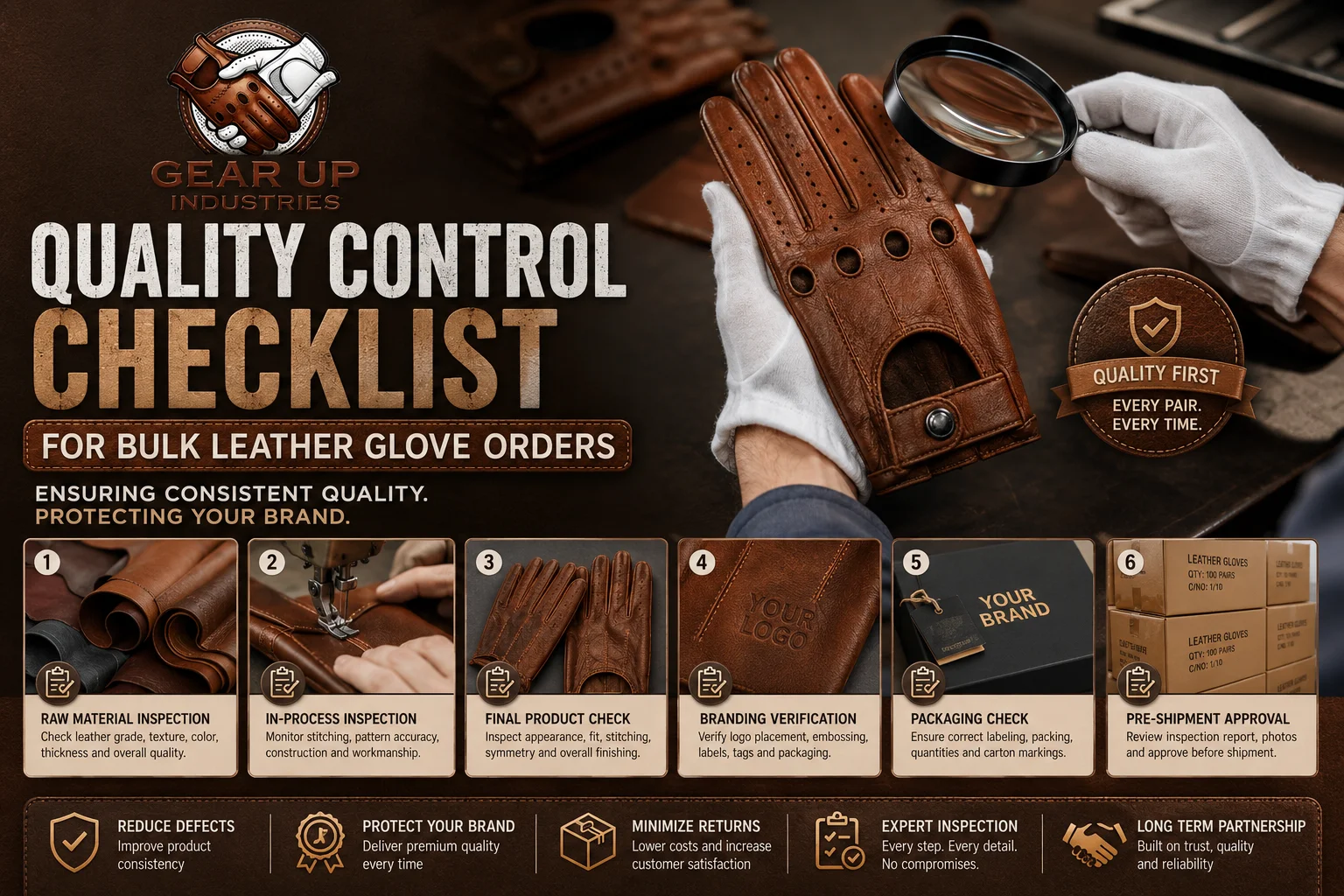
A complete quality assurance process includes:
- Material inspection
- Pre-production approval
- In-process inspection
- Final product inspection
- Packaging verification
- Pre-shipment approval
This structured approach greatly reduces the chances of receiving inconsistent products.
How Gearup Industries Maintains Quality Standards
At Gearup Industries, quality control is integrated into every stage of leather glove manufacturing rather than being treated as a final inspection only.
Our production team carefully monitors raw material selection, leather grading, cutting accuracy, stitching consistency, branding, and final packaging before any order is prepared for export.
We work closely with wholesalers, distributors, and private label brands across the USA to ensure every production run meets the agreed specifications and quality expectations.
Whether you’re sourcing Leather Driving Gloves or Leather Golf Gloves, our goal is to deliver consistent craftsmanship that supports long-term business relationships.
Frequently Asked Questions
When should quality control begin?
Quality control should begin before production starts by inspecting leather, hardware, and other raw materials. It should continue throughout manufacturing and end with a final pre-shipment inspection.
Why is pre-shipment inspection important?
A pre-shipment inspection identifies defects before products leave the factory, reducing costly returns, delays, and customer complaints.
What should buyers inspect on leather gloves?
Buyers should inspect leather quality, stitching, sizing, branding, hardware, packaging, labeling, and overall consistency across the production batch.
Can manufacturers provide inspection reports?
Yes. Professional manufacturers usually provide inspection reports, production photos, and shipment documentation before export.
How does Gearup Industries ensure consistent quality?
Gearup Industries follows quality checks throughout production, from raw material inspection to final packaging, helping USA buyers receive consistent products that match approved specifications.
Final Thoughts
Quality control is one of the most important steps in bulk leather glove sourcing. A structured inspection process protects your investment, strengthens your brand reputation, and helps ensure customers receive products that meet their expectations.
Rather than relying solely on the final shipment, successful importers verify quality at every stage—from raw material inspection to packaging approval. This proactive approach reduces defects, improves consistency, and supports long-term relationships with both customers and manufacturing partners.
At Gearup Industries, we believe quality isn’t something that’s inspected at the end—it’s built into every step of the manufacturing process. By combining experienced craftsmanship with consistent quality assurance, we help USA brands, wholesalers, and private label businesses source leather gloves with confidence.