

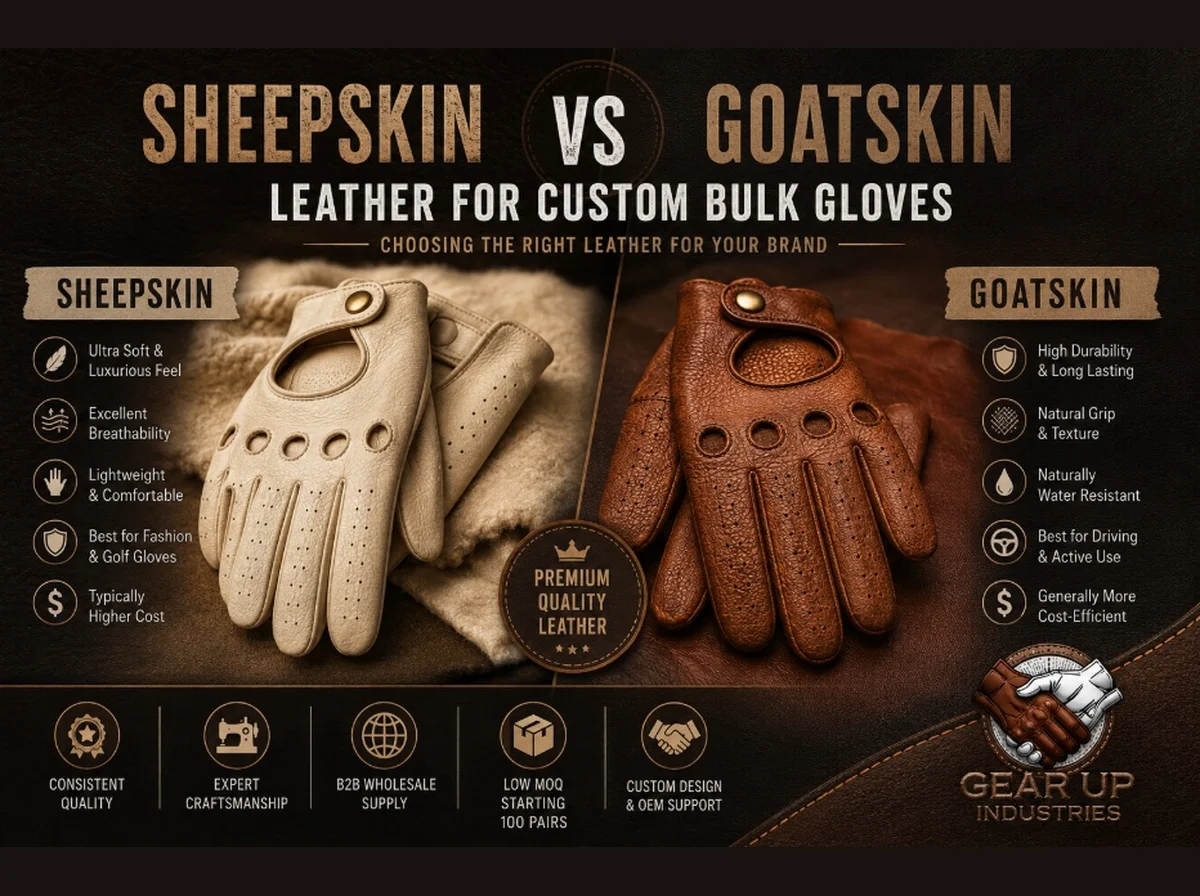
Choosing between sheepskin and goatskin is one of the first decisions any B2B buyer has to make before placing a bulk custom gloves order. It’s also one of the decisions that gets rushed the most, usually because buyers assume “leather is leather” until a sample arrives that doesn’t match their expectations. The hide you choose affects hand-feel, grip, weight, breathability, and how a batch of gloves holds up after months of real-world use, so it deserves more than a quick guess.
This guide breaks down how sheepskin and goatskin actually compare for glove manufacturing, and which one fits which product category, so you can walk into your next sourcing conversation with a manufacturer already knowing what to ask for rather than relying on whatever hide happens to be cheapest that season.
Sheepskin Leather: Characteristics for Bulk Glove Production
Sheepskin is the leather most associated with a soft, luxurious hand-feel, and for good reason.
Softness and Comfort
Sheep hides are naturally thinner and softer than most other glove leathers, largely because of their high lanolin content. That gives sheepskin gloves an almost buttery texture straight out of the box, with very little break-in period needed before the glove feels natural on the hand.
Breathability and Lightweight Feel
Because sheepskin is thinner than goatskin or cowhide, it breathes exceptionally well, which makes it a strong choice for gloves worn for extended periods where comfort and airflow matter more than heavy-duty toughness. The trade-off is that this same thinness makes sheepskin somewhat less resistant to repeated abrasion compared to tougher hides.
Goatskin Leather: Characteristics for Bulk Glove Production
Goatskin takes a different approach, trading a little softness for noticeably more durability.
Durability and Grip
Goat hides have a naturally grainy surface texture that isn’t just cosmetic, it actually improves grip, which is one reason goatskin shows up so often in gloves designed for active use. The fiber structure is denser than sheepskin, so goatskin resists everyday wear, scuffs, and repeated flexing far better over the life of the product.
Natural Water Resistance
Goatskin contains natural oils that give it a useful degree of water resistance without any added treatment. Combined with its durability, this makes it a practical choice for gloves that need to perform outdoors or in changing conditions, rather than staying in a drawer for occasional wear.
How Sheepskin and Goatskin Are Sourced for Bulk Manufacturing
Both hides are typically sourced as a by-product of the meat industry rather than raised specifically for leather, which is one reason supply and pricing can shift with regional demand for lamb, mutton, and goat meat. Sheepskin is widely sourced from regions with large wool and meat sheep populations, while goatskin is produced in high volumes across South Asia, including Pakistan, which has a long-established tanning and finishing infrastructure for this exact hide type. For B2B buyers, sourcing from a region with a mature tanning industry usually means more consistent grading and fewer surprises between what a sample looks like and what a full production batch delivers.
Mixed Construction: Using Both Leathers in One Glove
Some manufacturers combine both hides in a single glove rather than choosing one exclusively, for example, a more durable goatskin palm paired with a softer sheepskin backing for comfort, or vice versa depending on the design brief. This hybrid approach can be worth discussing with your manufacturer if you want the grip and durability of goatskin where the hand makes contact, without sacrificing the softer feel of sheepskin elsewhere on the glove. It does add a small amount of cost and production complexity, so it’s best suited to mid-to-premium product lines rather than entry-level bulk SKUs.
Sheepskin vs Goatskin: Side-by-Side for B2B Buyers
| Factor | Sheepskin | Goatskin |
| Softness | Very soft, buttery feel | Slightly firmer, textured grain |
| Durability | Moderate, best for lighter use | High, holds up to repeated use |
| Breathability | Excellent | Good |
| Water resistance | Low without treatment | Naturally water-resistant |
| Best suited for | Fashion and dress gloves | Driving and active-use gloves |
| Typical cost | Higher for comparable grade | Generally more cost-efficient |
Neither leather is objectively “better”, the right choice depends entirely on what the finished glove needs to do for the end customer.
Which Leather Suits Which Glove Category
Golf Gloves
Golf gloves need a leather that grips the club reliably while still stretching enough for a natural swing, which is why many manufacturers favor a fine hair-sheep leather like cabretta for this category, alongside goatskin options for buyers who want a slightly more durable, budget-conscious alternative. If you’re sourcing for this category, our leather golf gloves range covers both material options depending on your target price point.
Driving Gloves
Driving gloves benefit from goatskin’s durability and grip, since the leather needs to withstand constant contact with a steering wheel and repeated flexing at the knuckles without breaking down quickly. Buyers building a driving glove line, including fingerless driving gloves or crochet-style driving gloves, typically find goatskin holds its shape better across a full production run than sheepskin does.
Fashion and Dress Gloves
For dress or fashion-forward gloves where a soft, refined hand-feel matters more than heavy-duty performance, sheepskin is usually the stronger choice, since customers in this category are prioritizing comfort and drape over rugged use.
Cost Considerations for Bulk Orders
Cost differences between sheepskin and goatskin vary by region, grade, and tannery, so it’s worth requesting quotes on both before locking in a material decision, especially for a first bulk order. Goatskin is often the more cost-efficient option at comparable quality grades, which is part of why it’s so widely used across work, driving, and general-purpose gloves. Sheepskin, particularly higher grades sourced for a premium hand-feel, tends to sit at a higher price point, which buyers should factor into per-unit costing before finalizing an order.
It’s also worth asking your manufacturer whether pricing is quoted per hide or per finished pair, since hide yield varies between sheep and goat skins and affects the real cost per unit once cutting waste is accounted for.
Quality Control Tips When Sourcing Sheepskin or Goatskin in Bulk
Whichever leather you choose, a few quality checks apply across both:
- Ask for a physical swatch or sample pair before committing to bulk production, since color and texture photos rarely capture the true hand-feel of a hide.
- Confirm the leather grade and tanning method in writing, since two suppliers offering “sheepskin” can mean very different grades of hide.
- Check for consistency across the batch, not just the first sample, since natural hides can vary more than synthetic materials between production runs.
- Ask how the factory grades and sorts hides before cutting, since this step has a big influence on consistency across a large order.
- Request clarity on whether the hide is full-grain or split, since this single detail affects both the price and the long-term durability of the finished glove far more than the animal it came from.
This is the same due diligence covered in our broader B2B sourcing guide for custom leather gloves manufacturing, which walks through evaluating a manufacturer beyond just the material itself.
Frequently Asked Questions
Is goatskin more durable than sheepskin for gloves?
Yes, goatskin generally has a denser fiber structure than sheepskin, making it more resistant to abrasion and repeated flexing over the life of the glove.
Which leather is better for driving gloves, sheepskin or goatskin?
Goatskin is usually the better choice for driving gloves because of its durability, natural water resistance, and ability to hold its shape under constant grip and flex.
Does sheepskin cost more than goatskin?
Sheepskin, particularly at higher grades, often costs more than goatskin at a comparable quality level, though pricing varies by region, tannery, and hide grade.
Can sheepskin and goatskin both be used for golf gloves?
Yes, though many golf glove manufacturers favor fine hair-sheep leather like cabretta for its stretch and grip, while goatskin serves as a more durable, cost-efficient alternative.
Final Thoughts
Sheepskin and goatskin both have a clear place in custom glove manufacturing, sheepskin for a softer, more luxurious feel, and goatskin for durability, grip, and better resistance to daily wear. The right pick depends on your glove category, your target customer, and how the finished product will actually be used.
Gearup Industries, based in Sialkot, Pakistan, works with both leather types across its golf and driving glove lines and can guide you toward the right material based on your budget and end use. Contact us for sample availability and current pricing on either hide.