
If you’re building a glove brand from a warehouse in Los Angeles, a showroom in New York, or a distribution office in Chicago, the factory you choose will shape almost everything about your business, your margins, your delivery timelines, and whether your customers get a consistent product order after order. Yet most US brands and distributors still pick an OEM leather glove factory the same way they’d pick a restaurant: a quick search, a few photos, and a hopeful email, only to find out three months later that the sample and the bulk shipment don’t match at all.
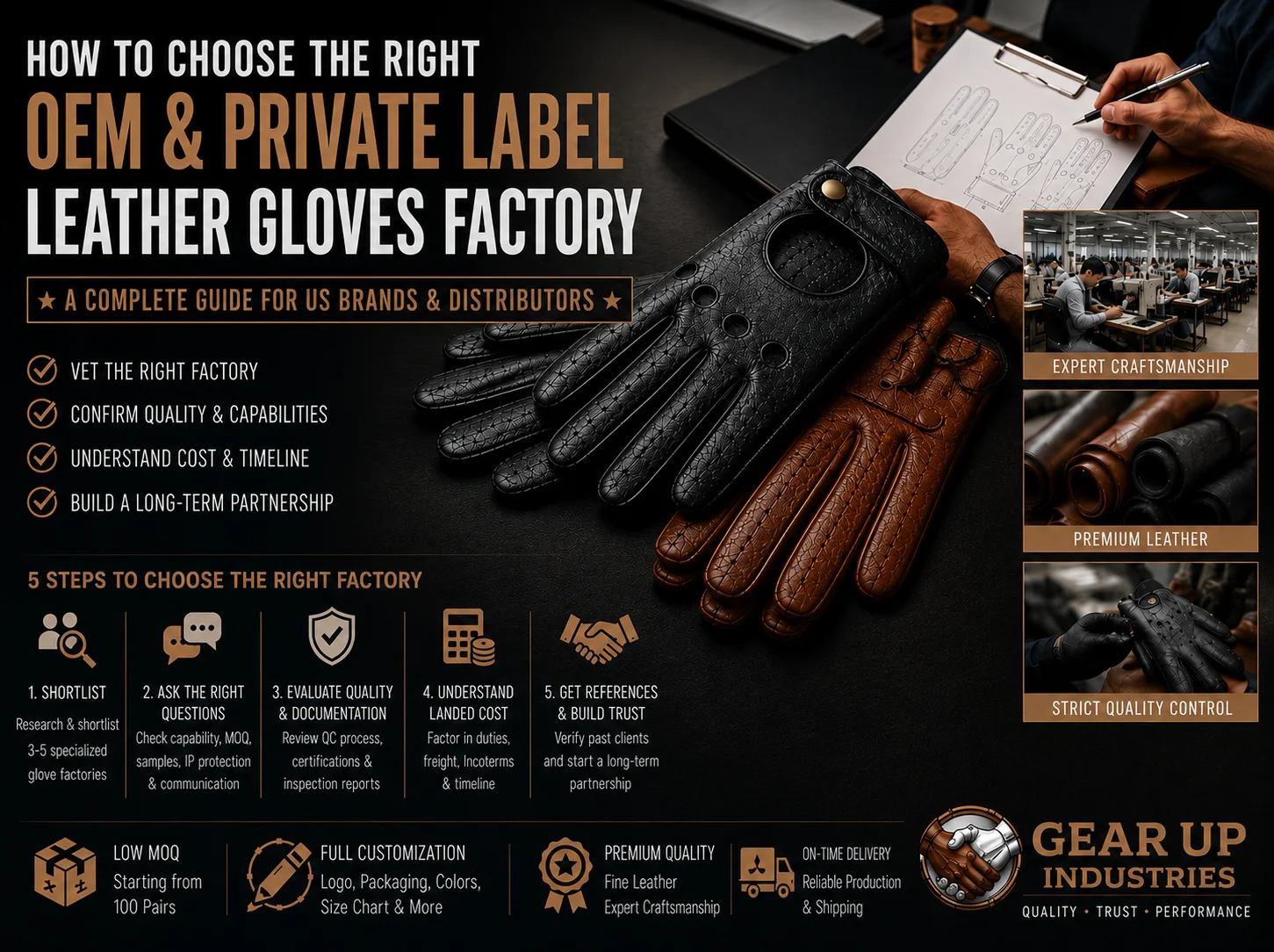
This guide is built for private label brands, wholesalers, and distributors across the US who are ready to vet an OEM leather glove manufacturer properly, rather than gambling a season’s inventory on an untested supplier. By the end, you’ll have a clear checklist you can actually use on your next call with a factory.
What OEM and Private Label Actually Mean for Glove Buyers
The terms get thrown around loosely, so it’s worth being precise before you start reaching out to factories.
OEM vs Private Label: The Real Difference
OEM (Original Equipment Manufacturer) production means a factory builds gloves to your exact specifications, your pattern, your leather grade, your branding. Private label typically refers to putting your brand on a factory’s existing design with lighter customization. Some suppliers use these terms interchangeably, so it’s worth asking directly which model a factory is actually offering before you assume full customization is included.
Why the Distinction Matters for US Buyers
A brand testing a new product line might be perfectly served by a private label approach with minor tweaks, while a brand looking to build long-term IP and a distinct silhouette needs true OEM development. Knowing which one you actually need before contacting factories saves weeks of back-and-forth clarifying scope.
Step 1: Build a Shortlist the Right Way
Don’t start with a single factory. Pull together three to five candidates and look specifically for factories that specialize in leather gloves rather than general leather goods or general PPE. A supplier that also makes belts, bags, and gloves as a side offering rarely has the pattern-cutting depth that a dedicated glove factory does.
Where to Actually Find Candidates
Trade directories, LinkedIn outreach, referrals from other importers, and industry trade shows all work, but treat marketplace listings with extra caution. A high ranking on a B2B platform tells you a supplier pays for visibility, not that they actually manufacture what they’re listing. Always verify the production facility behind a listing before it makes your shortlist.
Matching the Factory to Your Product Category
If you’re building golf gloves, prioritize factories with a track record in fitted, stretch-leather categories. If you’re building driving gloves, look for experience with perforation, lining, and knuckle articulation instead. A factory that’s strong in one glove category won’t automatically transfer that skill to a completely different product.
Step 2: Ask the Right Questions Before You Request a Quote
Once you’ve narrowed the list, a short round of pointed questions filters out factories that aren’t a real fit long before you waste time on a formal quote.
Production Capability and Specialization
Ask how long the factory has produced leather gloves specifically, and request photos or references from similar product lines golf gloves, driving gloves, or fashion gloves, rather than a generic capabilities deck.
MOQ and Sample Policy
Confirm the minimum order quantity per design and whether a pre-production sample is included or charged separately. A factory that expects you to commit to a bulk order before you’ve even seen a physical sample is a factory that hasn’t built its process around buyer confidence.
IP Protection and Confidentiality
For any OEM program built around your own design, ask whether the factory signs an NDA and confirms in writing that your pattern won’t be produced for other buyers. This single point separates a genuine OEM partner from a supplier that treats every design as reusable stock.
Communication Speed as a Screening Signal
How quickly and clearly a factory answers your first few questions is often the best predictor of how they’ll handle a problem mid-production. Slow, vague, or evasive replies during the inquiry stage rarely improve once a deposit has been paid.
What Customization Should Actually Include
Before you request a quote, get clear on what “customization” covers at each factory, since the term means different things to different suppliers. Ask specifically about logo embossing or debossing on the cuff, custom hangtags and retail packaging, thread color matching, and whether size charts can be standardized to your own brand’s specifications rather than the factory’s default. Brands that skip this step often end up with a technically correct private label glove that still doesn’t feel fully their own on the shelf.
Step 3: Evaluate Quality Control and Documentation
A factory should be able to describe its quality control process clearly: how leather is graded on arrival, how stitching consistency is checked during production, and whether a pre-shipment inspection report is issued before your container leaves the port. If you want a deeper breakdown of vetting a manufacturer beyond this checklist, our B2B sourcing guide for custom leather gloves manufacturing covers the full evaluation process in detail, including leather grading and shipping documentation.
Step 4: Understand Landed Cost, Not Just the Quote
A quote that looks cheap on paper can turn expensive once duties, freight, and Incoterms are factored in. US importers should confirm whether pricing is FOB (factory port), CIF (including freight), or EXW (ex-works, buyer arranges everything), since this single detail changes your real landed cost per pair once the shipment clears US customs. Leather gloves typically fall under specific HTS codes with their own duty rates, so it’s worth confirming the applicable rate with your customs broker rather than assuming it matches other apparel categories. It’s also worth asking your factory contact for a realistic production timeline in writing, since “four weeks” verbally often becomes six or seven once sampling revisions are included.
How Long the Full Process Usually Takes
For US buyers planning inventory around a launch date or retail season, a realistic timeline from first sample request to delivery at a US warehouse typically runs eight to twelve weeks: one to two weeks for sampling, three to six weeks for bulk production depending on order size and customization, and the remainder for sea freight and customs clearance. Air freight can compress this for smaller, time-sensitive orders, at a higher per-unit shipping cost. Building this timeline into your product launch calendar early avoids the scramble of a factory rushing corners to hit an unrealistic deadline.
Step 5: Get References, Not Just Promises
Before committing to a factory, ask for two or three references from existing private label clients, ideally in a similar product category to yours. A supplier that hesitates to provide references, or only offers testimonials copied onto its own website, is worth a second look before you place a deposit.
Common Red Flags When Vetting an OEM Leather Glove Factory
- Refusing to provide a sample before requesting a large deposit
- Vague or shifting answers about leather grade and origin
- No clear NDA or confidentiality policy for custom designs
- Unwillingness to share references or a factory walkthrough
- Pricing that seems significantly below every other quote you’ve received, often a sign of thinner leather or lower stitching standards
Why US Brands Source OEM Leather Gloves From Pakistan
Sialkot, Pakistan has been a hub for leather glove manufacturing for decades, with an established supply chain for hides, stitching labor, and export logistics already built around this exact product category. This is part of why many US golf and driving glove brands work with Pakistani manufacturers directly rather than sourcing through a domestic reseller who adds a markup without adding any manufacturing capability of their own. If you’re comparing leather types for your own line, our guide to sheepskin vs goatskin leather for custom bulk gloves breaks down which hide suits which glove category.
How Gearup Industries Supports US Private Label Buyers
Gearup Industries, based in Sialkot, Pakistan, works directly with US wholesalers, distributors, and private label brands sourcing custom leather golf gloves and leather driving gloves, including fingerless and crochet-style designs. MOQs start at 100 pairs, samples are available before any bulk commitment, and full OEM customization covers logo placement, packaging, and color palette. You can read more about the team’s manufacturing background on the About Us page.
Frequently Asked Questions
What’s the difference between OEM and private label gloves?
OEM means a factory builds gloves to your exact custom specifications, while private label usually means placing your brand on an existing design with lighter customization.
What MOQ should I expect from an OEM leather glove factory?
Many established manufacturers, including Gearup Industries, offer MOQs starting around 100 pairs per design, which is workable for brands testing a new product line before scaling up.
Should I request a sample before placing a bulk order?
Yes. A pre-production sample confirms leather grade, stitching, and branding placement, and any factory that discourages sampling or pushes straight to bulk production should be treated with caution.
How does landed cost differ from the factory quote?
Landed cost includes the factory price plus freight, duties, and any import fees once the shipment clears US customs, which is why confirming Incoterms (FOB, CIF, EXW) upfront matters more than comparing quotes at face value.
Final Thoughts
Choosing the right OEM leather glove factory comes down to five things: knowing what you actually need (OEM vs private label), asking pointed questions before requesting a quote, checking quality control in writing, understanding your real landed cost, and getting references you can actually call. Buyers who follow this process consistently avoid the delays, quality surprises, and margin erosion that come from picking a factory on price alone.
Ready to start a conversation with a factory that answers these questions upfront? Request a quote and sample from Gearup Industries and get straight answers on MOQ, pricing, and lead times for your next order.