
As sustainability becomes a higher priority for consumers and businesses alike, many USA brands are paying closer attention to how their leather products are made. Retailers, wholesalers, and private label companies are no longer focused only on price and quality—they also want manufacturing partners that operate responsibly and support long-term business growth.
For companies sourcing leather gloves in bulk, finding the right manufacturer means looking beyond production capacity. It’s about understanding where the leather comes from, how products are manufactured, how workers are treated, and whether the supplier follows consistent quality and environmental practices.
Choosing a responsible manufacturing partner can help strengthen your brand reputation, improve customer confidence, and reduce supply chain risks. However, identifying an ethical manufacturer requires more than reviewing a website or comparing prices.
This guide explains what B2B buyers should evaluate when searching for a sustainable and ethical leather glove manufacturer and how to make informed sourcing decisions before placing a bulk order.
If you’re still learning how to evaluate suppliers, our B2B Sourcing Guide for Custom Leather Gloves Manufacturing provides a broader overview of selecting the right manufacturing partner before discussing sustainability.
Why Sustainability Matters in Leather Glove Manufacturing
Sustainability has become an important consideration throughout the global apparel and accessories industry.
Many retailers, distributors, and corporate buyers now expect suppliers to demonstrate responsible manufacturing practices alongside consistent product quality.
For leather glove brands, responsible sourcing helps:
- Strengthen brand credibility
- Meet customer expectations
- Support long-term business relationships
- Reduce supply chain risks
- Improve retailer confidence
- Prepare for changing market requirements
While price and quality remain important purchasing factors, sustainability is increasingly becoming part of supplier evaluations for many B2B buyers.
Sustainability Is More Than Environmental Protection
Many people associate sustainability only with protecting the environment.
In manufacturing, however, sustainability is much broader.
A responsible leather glove manufacturer should also focus on:
- Consistent product quality
- Responsible material sourcing
- Efficient production processes
- Worker safety
- Waste reduction
- Long-term business practices
Rather than being a single certification, sustainability is a combination of responsible decisions throughout the manufacturing process.
Why USA Buyers Are Asking More Questions
Large retailers and private label brands increasingly want greater visibility into their supply chains.
Before approving a supplier, many buyers now ask questions about:
- Material sourcing
- Manufacturing practices
- Product consistency
- Workplace standards
- Production transparency
- Supplier reliability
Manufacturers that communicate openly and provide accurate information often build stronger relationships with international buyers.
Sustainability Supports Long-Term Business Growth
Responsible sourcing isn’t just about meeting current customer expectations.
Working with dependable manufacturers helps businesses reduce production issues, improve consistency, and build stronger supplier relationships over time.
For companies developing private label collections, this consistency often becomes a competitive advantage.
Responsible Manufacturing Builds Customer Trust
Customers may never visit a factory, but they care about the products they purchase.
Brands that work with responsible manufacturing partners are often better positioned to communicate quality, craftsmanship, and long-term value to their customers.
Understanding the Difference Between Sustainable and Ethical Manufacturing
Although these terms are often used together, they describe different aspects of responsible manufacturing.
Understanding the difference helps buyers ask better questions when evaluating suppliers.
What Is Sustainable Manufacturing?
Sustainable manufacturing focuses on reducing environmental impact while maintaining efficient production.
Examples include:
- Reducing material waste
- Improving production efficiency
- Using resources responsibly
- Minimizing unnecessary waste
- Continuously improving manufacturing processes
Every factory approaches sustainability differently depending on its size, production methods, and customer requirements.
What Is Ethical Manufacturing?
Ethical manufacturing focuses on how people are treated throughout the production process.
Responsible manufacturers should prioritize:
- Safe working conditions
- Fair treatment of employees
- Professional workplace practices
- Compliance with applicable labor regulations
- Respectful working environments
For international buyers, ethical manufacturing helps reduce supply chain risks while supporting long-term partnerships.
Where Does the Leather Come From?
One of the first questions buyers should ask is where the leather used in production is sourced.
Leather quality begins long before manufacturing starts.
Professional manufacturers should be able to explain:
- The type of leather used
- The intended application
- Material consistency
- How leather is selected for production
Understanding material sourcing helps buyers make better purchasing decisions while reducing the risk of inconsistent product quality.
If you’re comparing different leather options for your product line, our guide Sheepskin vs. Goatskin Leather for Custom Bulk Gloves explains how each material performs in terms of durability, comfort, and typical applications.
Why Material Traceability Matters
Traceability refers to understanding where materials come from throughout the supply chain.
For buyers, this provides greater confidence that the materials being used match the agreed specifications.
Traceability also helps manufacturers maintain consistency across repeat production orders.
Rather than simply accepting “genuine leather” as a description, buyers should request clear information about:
- Leather type
- Material grade
- Intended use
- Color consistency
- Thickness specifications
The more transparent a manufacturer is about raw materials, the easier it becomes to build long-term trust.
Evaluate the Manufacturer’s Production Process
Responsible manufacturers don’t rely on inspections alone.
They build quality into every stage of production.
During supplier evaluations, ask how the factory manages:
- Material inspections
- Cutting accuracy
- Stitching consistency
- Production monitoring
- Final inspections
- Packaging verification
A structured production process generally results in more consistent products and fewer quality issues.
To understand how leather gloves move from raw material to finished product, read our guide How Leather Gloves Are Really Made — Straight From the Factory, which explains each production stage in detail.
Quality and Sustainability Work Together
Consistent quality contributes to sustainability in practical ways.
Well-made products are less likely to require replacements, generate returns, or create unnecessary waste caused by manufacturing defects.
Professional manufacturers therefore treat quality control as an important part of responsible production.
If you’d like to understand how inspections support product consistency, our Quality Control Checklist for Bulk Leather Glove Orders explains the key quality checks buyers should expect before shipment.
Questions to Ask Before Choosing a Sustainable Leather Glove Manufacturer
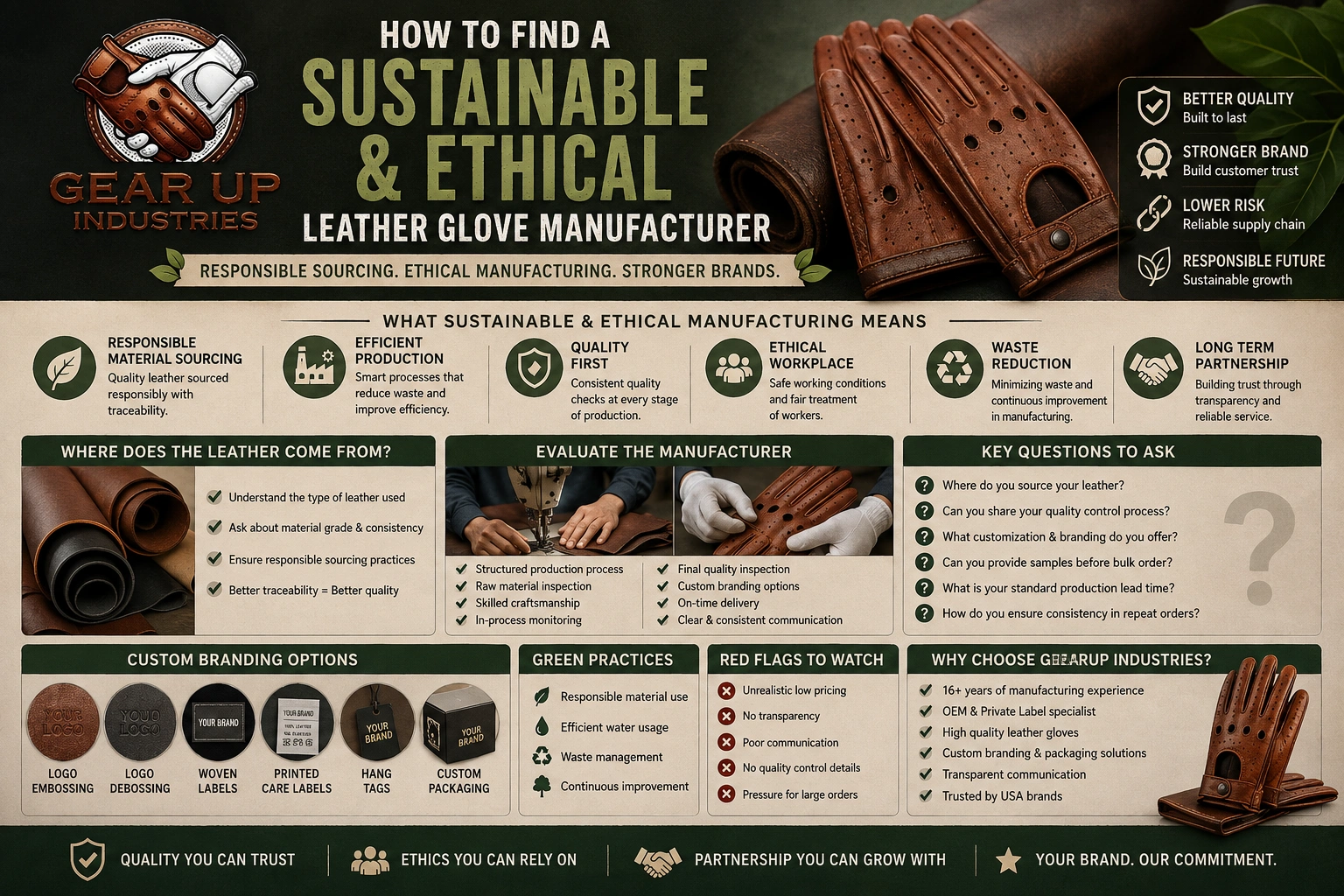
Selecting a responsible manufacturing partner starts with asking the right questions. Instead of relying only on marketing claims, buyers should evaluate how transparent and prepared a supplier is during the sourcing process.
Some practical questions include:
- Where do you source your leather?
- How do you inspect raw materials before production?
- Can you explain your quality control process?
- What customization options do you offer for private label brands?
- How do you handle production updates and customer communication?
- Can you provide product samples before bulk production?
- What is your standard production lead time?
- How do you ensure consistency across repeat orders?
Manufacturers that answer these questions clearly and confidently often demonstrate stronger operational processes than those providing vague or incomplete responses.
Look for Transparency Instead of Marketing Claims
Many suppliers describe themselves as “eco-friendly” or “ethical,” but these terms don’t always explain how they actually operate.
Rather than focusing on promotional language, evaluate whether the manufacturer is transparent about:
- Production capabilities
- Material selection
- Manufacturing processes
- Sampling procedures
- Quality control
- Export experience
Open communication throughout the sourcing process is usually a stronger indicator of professionalism than broad marketing claims.
Red Flags to Watch for During Supplier Evaluation
Choosing the wrong supplier can lead to delays, inconsistent products, and communication challenges.
Watch for warning signs such as:
- Unrealistically low pricing compared to the market
- Unclear answers about production processes
- Poor communication during the quotation stage
- Inconsistent sample quality
- Frequent changes to lead times
- Limited willingness to discuss quality control
- Pressure to place large orders without sampling
Identifying these issues early helps buyers reduce sourcing risks before production begins.
Don’t Base Your Decision on Price Alone
Price is important, but it should never be the only factor when selecting a manufacturer.
A supplier offering the lowest quotation may not always provide:
- Consistent quality
- Reliable communication
- Flexible customization
- Stable production schedules
- Long-term support
Many experienced importers evaluate overall value rather than simply comparing unit prices.
If you’re deciding whether to work directly with a manufacturer or through an intermediary, our guide Factory Sourcing vs. Sourcing Agents: Which Is Better for Leather Gloves? explains the advantages of each sourcing approach.
Communication Builds Stronger Supplier Relationships
Responsible manufacturing also depends on clear and consistent communication.
From sampling to final shipment, buyers should receive timely updates that help them monitor progress and make informed decisions.
Professional manufacturers typically provide communication regarding:
- Sample approval
- Production schedules
- Material availability
- Quality inspections
- Packaging progress
- Shipment preparation
Consistent communication reduces misunderstandings and helps build long-term business relationships based on trust.
Think Beyond Your First Order
The best supplier isn’t necessarily the one that offers the lowest quote today.
Instead, consider whether the manufacturer can support your business as it grows.
Ask yourself:
- Can they handle larger production volumes in the future?
- Can they support additional product categories?
- Do they offer OEM and private label services?
- Are they responsive when questions arise?
- Can they maintain consistent quality across repeat orders?
Long-term partnerships often create better sourcing outcomes than switching suppliers solely for short-term cost savings.
Why Many USA Buyers Work with Gearup Industries
At Gearup Industries, we understand that successful sourcing depends on more than manufacturing leather gloves. Buyers also need a supplier that communicates clearly, delivers consistent quality, and supports long-term business relationships.
We work directly with wholesalers, distributors, retailers, and private label brands across the United States, offering OEM manufacturing for leather driving gloves, fingerless driving gloves, crochet driving gloves, and leather golf gloves.
Our team focuses on:
- Transparent communication throughout production
- Consistent manufacturing quality
- Flexible OEM and private label solutions
- Product customization and branding
- Reliable export support
- Long-term manufacturing partnerships
Rather than making broad sustainability claims, we believe in providing buyers with clear information, dependable service, and the transparency needed to make confident sourcing decisions.
If you’re planning to build your own private label collection, our guide Custom Logo Embossing and Branding Options for Leather Gloves explains the branding solutions available for OEM leather glove manufacturing.
Frequently Asked Questions
What makes a leather glove manufacturer sustainable?
A sustainable manufacturer focuses on responsible production practices, efficient resource management, consistent quality, and transparent sourcing processes while continuously improving manufacturing operations.
What is ethical leather glove manufacturing?
Ethical manufacturing refers to responsible business practices, including safe working environments, professional labor practices, transparent communication, and compliance with applicable regulations.
Why is supplier transparency important?
Transparent suppliers provide clear information about materials, production processes, quality control, and lead times, helping buyers make informed sourcing decisions and reduce supply chain risks.
Should I ask about leather sourcing before placing an order?
Yes. Understanding the type of leather, material specifications, and sourcing practices helps ensure the finished products meet your quality expectations.
How can Gearup Industries support private label buyers?
Gearup Industries offers OEM manufacturing, product customization, private label solutions, and direct communication throughout the production process to help USA businesses source leather gloves with confidence.
Final Thoughts
Finding a sustainable and ethical leather glove manufacturer involves more than comparing prices or reviewing product catalogs. The best long-term partners are those that combine consistent product quality with transparent communication, responsible manufacturing practices, and dependable customer support.
By asking the right questions, evaluating production processes, and building relationships with experienced manufacturers, buyers can reduce sourcing risks while strengthening their own brand reputation.
At Gearup Industries, we help USA wholesalers, distributors, retailers, and private label brands source high-quality leather gloves through reliable OEM manufacturing and clear, professional communication. Whether you’re launching a new product line or expanding an existing collection, our team is committed to supporting your business with consistent quality and responsive service.