
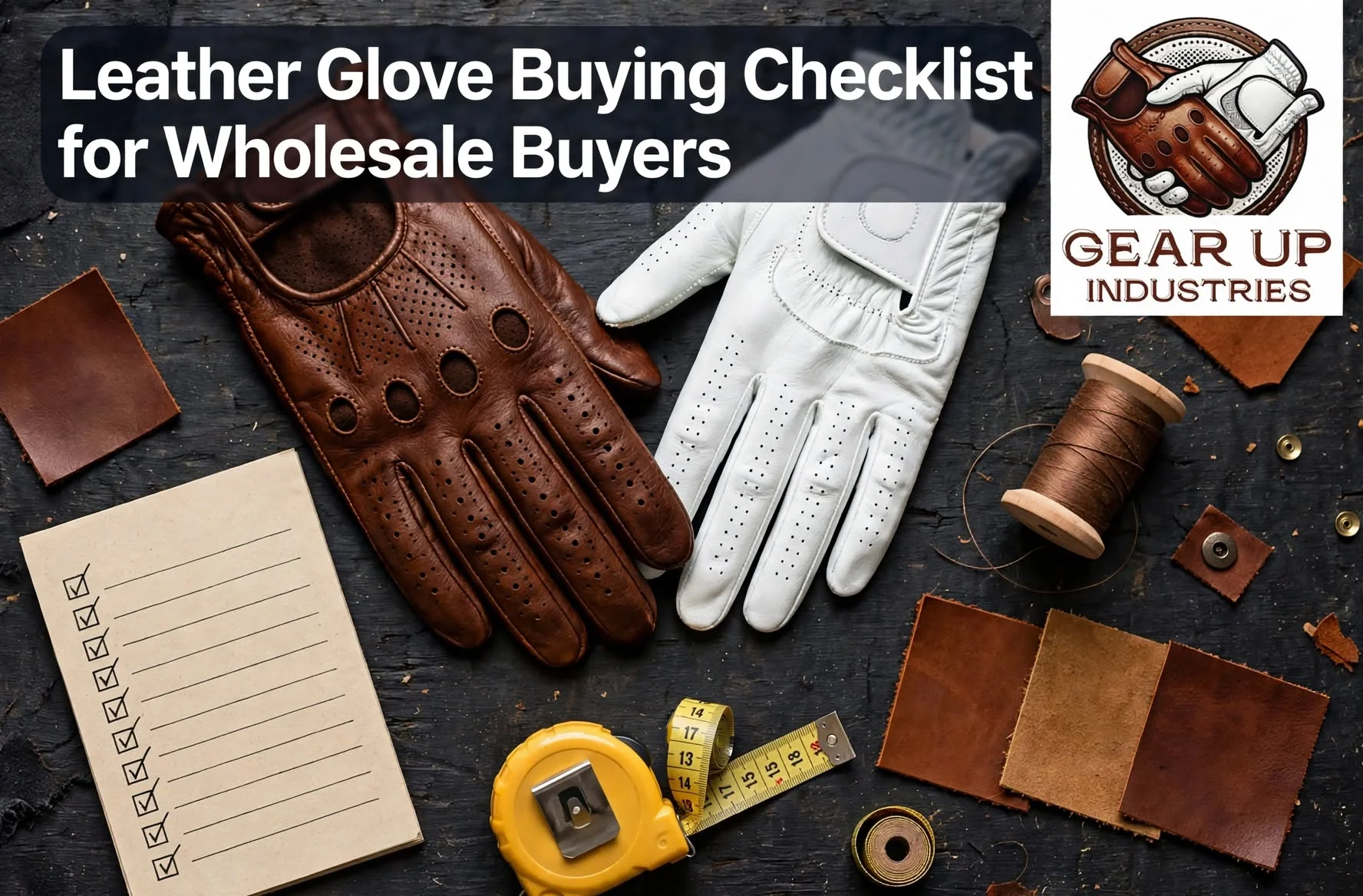
Buying leather gloves in bulk requires more than comparing unit prices. For USA wholesalers, retailers, glove brands, distributors, and private-label businesses, the quality of the final order depends on decisions made before production starts.
Leather type, glove construction, sizing, stitching, branding, packaging, sample approval, and quality control all need to be considered before placing a bulk order. A low quoted price may not mean much if the finished gloves do not match the approved sample or the specifications required by your customers.
A structured buying checklist helps buyers compare suppliers consistently and reduce avoidable problems during production.
This guide provides a practical leather glove buying checklist for bulk buyers, covering the main points to review before approving a wholesale or private-label order.
Why Bulk Leather Glove Buyers Need a Checklist
A small mistake in a single pair can become a much larger issue when it is repeated across a bulk production run.
For example, if a size specification is incorrect, the problem may affect an entire size range. If the leather color is not properly approved, a full batch may differ from the buyer’s expectations.
A checklist gives buyers a repeatable way to review the product before, during, and after manufacturing.
What a Bulk Buying Checklist Should Cover
A practical checklist should include:
- Leather type and quality
- Product design
- Glove measurements
- Size range
- Stitching and construction
- Lining
- Branding
- Packaging
- Sample approval
- MOQ
- Quality control
- Shipping requirements
Separate Product Requirements From Commercial Requirements
Not every sourcing decision relates directly to the physical glove.
Product Requirements
Product requirements include:
- Leather
- Color
- Thickness
- Pattern
- Size
- Stitching
- Lining
- Branding
- Packaging
Commercial Requirements
Commercial requirements include:
- Order quantity
- MOQ
- Sampling
- Payment terms
- Shipping method
- Destination
- Reorder requirements
Keeping both areas documented helps avoid confusion during production.
1. Confirm the Leather Type Before Ordering
The leather specification should be one of the first items on your buying checklist.
Different leather types can produce different characteristics in terms of softness, flexibility, surface appearance, and durability.
For a bulk order, simply writing “genuine leather” may not provide enough detail.
Specify the Actual Leather Requirement
Depending on the product, buyers may need to specify:
- Leather type
- Leather grade
- Thickness
- Finish
- Color
- Surface appearance
- Desired softness
- Acceptable natural variation
Match Leather With the Glove Category
A material selected for a driving glove may have different requirements from one selected for a golf glove.
Compare Sheep and Goat Leather When Relevant
If your product concept allows multiple leather options, review the differences before approving the material.
Use the Material Decision in Your Product Specification
The Sheepskin vs Goatskin Leather for Custom Bulk Gloves guide can help buyers understand the material differences before finalizing a custom bulk order.
2. Check the Glove Design and Construction
A bulk buyer should not approve a product based only on its general appearance.
Small construction details can influence the finished glove’s fit, comfort, appearance, and production cost.
Review Every Major Component
Check:
- Palm construction
- Finger construction
- Thumb design
- Cuff
- Openings
- Perforations, if applicable
- Reinforcements
- Closure system
- Lining
Match the Design to the Intended Market
A USA retail brand selling premium driving gloves may require different construction from a distributor purchasing gloves for a different customer segment.
Confirm the Final Product Style
Make sure the supplier understands whether the order is for:
- Full-finger driving gloves
- Fingerless driving gloves
- Crochet-back driving gloves
- Leather golf gloves
- Another custom design
Approve the Exact Construction
The final sample should represent the construction that will be used in bulk production.
3. Evaluate Leather Quality and Surface Appearance
Natural leather can have variations in grain, texture, and surface markings.
Some variation may be expected, but buyers should establish what is acceptable for the finished product.
Check for Visible Leather Defects
During sample and production inspection, look for:
- Deep scratches
- Holes
- Excessive scars
- Stains
- Uneven color
- Major texture differences
- Weak areas
- Incorrect finishing
Define Acceptable Natural Variation
Natural material variation should not be confused with manufacturing defects.
Create a Visual Reference
A physical sample can help establish the expected:
- Color
- Grain
- Texture
- Finish
- Overall appearance
Compare Bulk Production With the Reference
When production begins, finished gloves should be compared with the approved sample to identify significant differences.
4. Confirm Glove Sizing and Measurements
Sizing is one of the most important areas for bulk glove buyers.
A product may carry the correct size label but still have inconsistent palm, finger, thumb, or cuff dimensions.
Define Actual Measurements
Instead of specifying only S, M, L, or XL, buyers should consider documenting measurements such as:
- Palm circumference
- Overall glove length
- Finger length
- Thumb length
- Cuff opening
- Palm width
Build a Consistent Size Range
A wholesale collection should have logical grading between sizes.
Check Every Major Size
Do not approve only one size and assume every other size will automatically be correct.
Review Size Samples Before Bulk Production
Where possible, review representative sizes before approving the final production specifications.
5. Inspect Stitching and Seam Construction
Stitching has a direct effect on the appearance and construction of leather gloves.
Loose threads, uneven seams, inconsistent stitch length, or poor seam alignment can make a product look unfinished.
What to Check on Stitching
Look for:
- Consistent stitch length
- Straight seam lines
- Secure thread ends
- Correct thread color
- Proper seam placement
- No skipped stitches
- No excessive puckering
- No visible gaps
Pay Attention to High-Movement Areas
Thumb joints and finger areas deserve additional attention because these parts move frequently.
Compare Left and Right Gloves
Both gloves should have consistent stitching and construction.
Inspect Seams Before Final Approval
A quick visual check during sampling can help identify construction issues before they become production-wide problems.
For a deeper understanding of construction options, buyers can refer to the Leather Glove Stitching Types: A Manufacturing Guide when discussing specifications with a manufacturer.
6. Review the Fit and Hand Movement
A glove can meet its basic measurements and still feel uncomfortable if the pattern or construction is not properly developed.
Fit should therefore be evaluated on the finished sample rather than through measurements alone.
Check the Main Fit Areas
Evaluate:
- Palm fit
- Finger movement
- Thumb position
- Finger length
- Cuff fit
- Overall flexibility
Test the Finished Sample
The buyer should handle and, where appropriate, wear the sample to evaluate how it behaves during normal movement.
Look for Restriction
Pay attention to:
- Tight finger areas
- Restricted thumb movement
- Excess material
- Loose fingertips
- Uncomfortable seams
Record Changes Before Bulk Production
If the sample requires adjustments, document them clearly before the manufacturer starts the bulk order.
7. Check Lining and Internal Construction
If your gloves are lined, the lining should be included in the buying checklist.
A glove can look excellent from the outside while having problems inside the fingers or cuff.
What to Check Inside the Glove
Inspect:
- Lining material
- Lining length
- Finger lining
- Thumb lining
- Cuff attachment
- Excess internal material
- Wrinkles
- Loose areas
Make Sure the Lining Supports the Product
The lining should work with the intended product rather than creating unnecessary bulk.
Check Finger Areas Carefully
Excess lining inside the fingers can affect the fit and feel.
Inspect the Interior During Sampling
Internal construction should be reviewed before the sample is approved, not after the bulk order arrives.
8. Confirm Branding and Customization
For private-label buyers, branding is an important part of the product specification.
Logo placement, size, method, and finish should be agreed before production.
Branding Details to Confirm
Specify:
- Logo artwork
- Logo dimensions
- Placement
- Orientation
- Branding method
- Color or finish
- Position on the glove
Review Branding on the Actual Product
A logo may look different on leather compared with digital artwork.
Approve a Physical Branded Sample
This allows buyers to check the actual logo appearance before production.
Use the Approved Branding as the Production Reference
Bulk production should follow the approved artwork and physical sample.
For buyers planning custom branding, the Custom Logo Embossing and Branding Options for Leather Gloves guide provides additional context on branding possibilities.
9. Confirm Packaging Requirements
Packaging should be included in the buying checklist from the beginning.
For retail and private-label orders, packaging is part of the finished product rather than something to decide after manufacturing.
Packaging Details to Define
Consider:
- Individual packaging
- Pair packaging
- Hangtags
- Product cards
- Care instructions
- Barcodes
- Size labels
- Brand labels
- Carton quantities
- Carton markings
Match Packaging With the Sales Channel
A glove sold through a retail store may require different packaging from a bulk distributor shipment.
Confirm Artwork Before Production
Packaging artwork should be approved before the manufacturer begins printing or producing custom packaging.
Check Packaging Against the Finished Product
Make sure size labels, colors, logos, and product information match the actual gloves inside.
10. Confirm MOQ and Order Quantity
MOQ is an important commercial consideration for bulk buyers.
Gearup Industries‘ sourcing brief specifies an MOQ starting from 100 pairs per design, although the final requirements can depend on the project and customization.
Understand What the MOQ Applies To
Ask whether the MOQ is based on:
- Per design
- Per color
- Per size
- Total order
- Custom packaging
- Custom branding
Consider Your Size and Color Mix
A total order quantity can look sufficient until it is divided across several designs, colors, and sizes.
Plan the Quantity by SKU
Create a simple purchasing table showing each design and its required quantity.
Confirm the Final Quantity With the Manufacturer
This avoids misunderstandings about what is included in the quoted MOQ.
11. Request a Sample Before the Bulk Order
Sample approval is one of the most important steps in bulk glove sourcing.
A sample gives the buyer an opportunity to inspect the actual product before committing to the full production quantity.
What to Evaluate in a Sample
Review:
- Leather
- Color
- Thickness
- Fit
- Size
- Stitching
- Lining
- Branding
- Finishing
- Packaging
Compare the Sample With Your Original Specification
The sample should be checked against the written product requirements.
Record Required Changes
If something needs to be adjusted, document the change clearly.
Approve One Final Version
Once the sample meets the requirements, use that version as the reference for bulk production.
12. Create a Quality Control Checklist
Quality control should not be left until the shipment reaches the buyer.
A production inspection process can identify problems earlier.
Key Quality-Control Areas
Inspect:
- Leather condition
- Color
- Dimensions
- Stitching
- Pair matching
- Logo placement
- Finishing
- Lining
- Packaging
Use the Approved Sample During Inspection
The approved sample provides a physical benchmark for comparing production gloves.
Check Individual Gloves and Complete Pairs
Both approaches are useful because some problems are visible only when the left and right gloves are compared.
Document Significant Defects
Photos, measurements, and written descriptions can make it easier to communicate production issues.
For a more detailed inspection framework, buyers can also review the Quality Control Checklist for Bulk Leather Glove Orders.
13. Review Shipping and Packing Details
The buying process does not end when manufacturing is completed.
Bulk buyers should also confirm how the finished products will be packed and shipped.
Shipping Details to Confirm
Discuss:
- Destination
- Shipping method
- Carton quantity
- Packaging dimensions
- Shipment documentation
- Delivery requirements
- Freight arrangements
Match Shipping With Your Inventory Plan
For USA buyers, shipping arrangements should be considered alongside warehouse capacity and planned inventory arrival.
Confirm Carton Information
Make sure carton markings and quantities are clear before shipment.
Keep Shipping Details in the Purchase Documentation
Having the requirements documented helps reduce confusion between production, packing, and shipping teams.
14. Check the Manufacturer Before Placing the Order
The product checklist is important, but the supplier itself also needs evaluation.
A manufacturer may offer a competitive quotation, but buyers should also consider whether the supplier’s capabilities match the project.
What to Evaluate in a Leather Glove Manufacturer
Consider:
- Relevant product experience
- Product specialization
- Sampling process
- Customization capabilities
- Quality-control process
- Communication
- MOQ
- Packaging options
- Export experience
Ask Product-Specific Questions
Instead of asking only whether a factory “makes gloves,” ask about the exact type of glove you want to develop.
Confirm Relevant Product Capability
For example, ask about experience with:
Match the Manufacturer to Your Product
The right sourcing conversation should begin with your actual product requirements rather than a generic request for “leather gloves.”
Complete Leather Glove Buying Checklist
Before placing a bulk order, use this condensed checklist:
| Buying Area | What to Confirm |
| Leather | Type, grade, thickness, color and finish |
| Design | Pattern, construction and glove style |
| Sizing | Measurements, grading and size range |
| Stitching | Seam construction, thread and stitch quality |
| Fit | Finger, palm, thumb and cuff movement |
| Lining | Material, fit and internal construction |
| Branding | Artwork, method, size and placement |
| Packaging | Individual, pair and carton requirements |
| MOQ | Quantity per design, color or project |
| Sample | Final sample approved before bulk |
| QC | Inspection points and acceptable standards |
| Shipping | Destination, cartons and shipping requirements |
| Supplier | Capability, communication and sourcing fit |
Turn the Checklist Into a Purchase Specification
The checklist becomes more useful when it is converted into a written product specification.
Keep One Approved Reference
All important changes should be reflected in the final specification and sample.
Share the Final Version With the Manufacturer
Both the buyer and manufacturer should work from the same approved requirements.
Use the Same Specification for Future Reorders
A documented specification can make repeat orders easier because the buyer has a clear reference for materials, measurements, construction, branding, and packaging.
Frequently Asked Questions
What should I check before buying leather gloves in bulk?
Check the leather type, quality, color, construction, sizing, stitching, lining, branding, packaging, MOQ, sample, quality-control process, and shipping requirements.
What leather specifications should bulk buyers ask for?
Buyers should clarify the leather type, grade, thickness, finish, color, surface appearance, and acceptable natural variation.
Should I approve a sample before placing a bulk leather glove order?
Yes. A finished sample allows you to evaluate the actual leather, fit, sizing, stitching, branding, finishing, and construction before bulk production.
What is a typical MOQ for Gearup Industries leather gloves?
Gearup Industries’ current sourcing brief states an MOQ starting from 100 pairs per design. Buyers should confirm the final MOQ for their specific design and customization requirements.
How can I check leather glove quality before shipment?
Use a documented inspection checklist covering leather, color, dimensions, stitching, pair matching, branding, finishing, lining, and packaging.
What should private-label buyers include in their glove specifications?
Private-label buyers should document the leather, color, measurements, construction, stitching, logo artwork and placement, lining, packaging, labeling, and quality requirements.
Why is sizing important when ordering leather gloves in bulk?
Incorrect sizing can affect a large portion of an order. Buyers should establish actual measurements and review representative sizes before approving bulk production.
Final Thoughts
Buying leather gloves in bulk requires more than finding a manufacturer and requesting a price.
For USA wholesalers, retailers, glove brands, distributors, and private-label businesses, a structured checklist can help organize the entire sourcing process from leather selection and sizing to sampling, branding, quality control, packaging, and shipping.
The most important step is to define the product clearly before bulk production begins. An approved sample, written specifications, and agreed inspection requirements give both buyer and manufacturer a shared reference.
Gearup Industries supplies leather gloves for B2B buyers and supports custom product requirements including leather driving gloves and leather golf gloves. For buyers developing a new collection, a detailed checklist can make communication clearer and help keep the bulk order aligned with the approved product.