

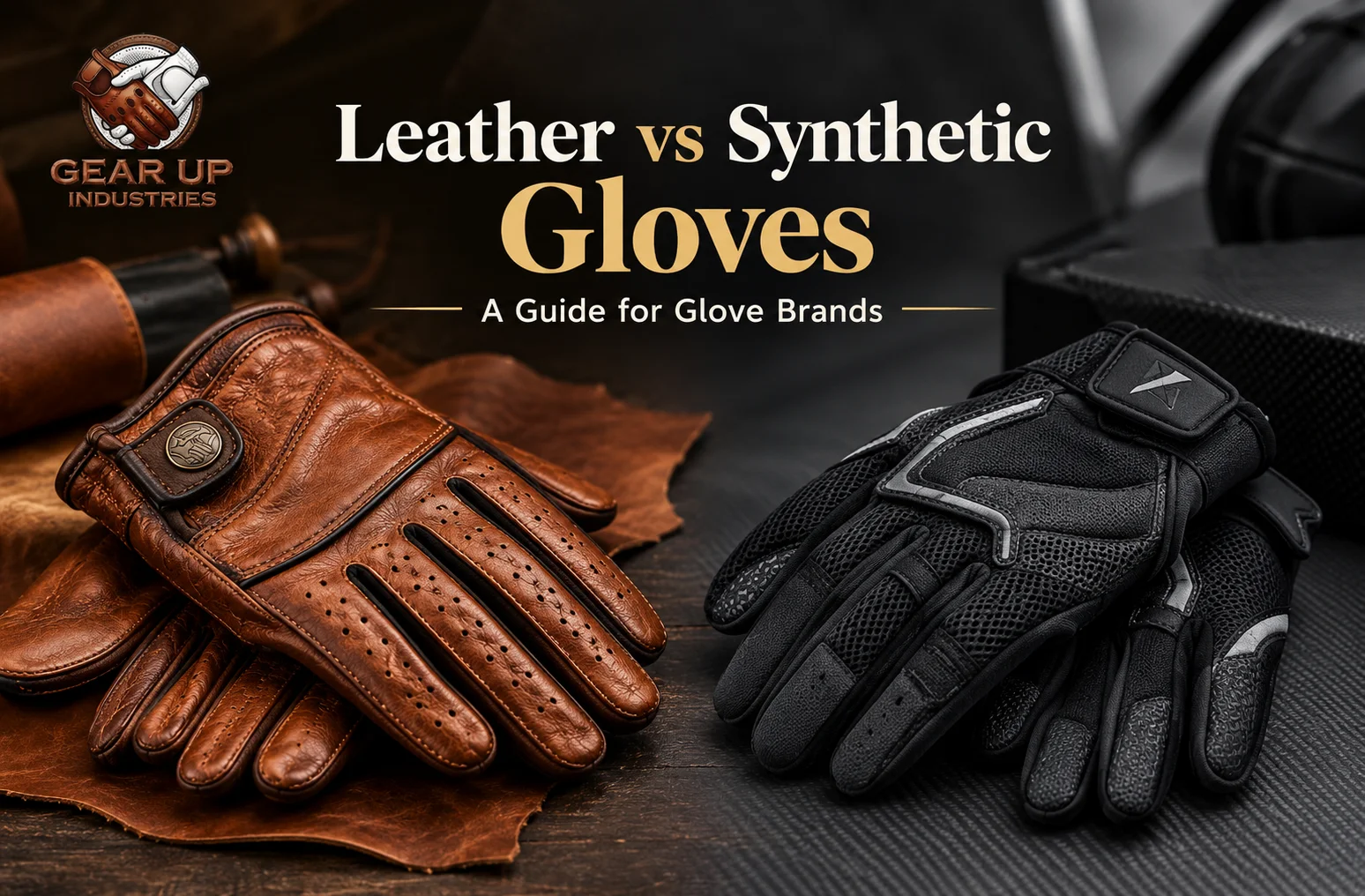
When launching or expanding a glove collection, one of the first product decisions is the material. Leather gloves and synthetic gloves can both serve different customer needs, but they create different opportunities for product quality, pricing, comfort, appearance, and brand positioning.
For glove brands, retailers, wholesalers, and private-label businesses in the USA, material selection is not simply a question of which option costs less. The right choice depends on the type of glove being developed, the intended customer, desired product positioning, and the characteristics buyers expect from the finished product.
This is particularly important for brands developing leather driving gloves, golf gloves, and other premium lifestyle glove collections.
This guide compares leather and synthetic gloves from a B2B sourcing perspective so buyers can better understand the differences before developing a new product line.
Leather vs Synthetic Gloves: What Is the Difference?
Leather gloves are made from animal hide that has been processed into usable leather. Depending on the product, manufacturers may work with different leather types and grades to achieve specific levels of softness, strength, flexibility, and appearance.
Synthetic gloves are made from manufactured materials rather than natural animal hide. Common synthetic materials can include polyurethane-based materials, polyester, nylon, microfiber, and other engineered textiles.
For a brand, the difference goes beyond the material itself.
It can influence:
- Product appearance
- Hand feel
- Flexibility
- Breathability
- Durability
- Maintenance
- Retail positioning
- Product pricing
- Customer expectations
- Overall brand identity
Why Material Selection Matters for Glove Brands
A material decision made at the beginning of product development affects many later decisions.
For example, a brand creating premium leather driving gloves may prioritize natural leather texture, craftsmanship, comfort, and classic styling. A brand targeting a more affordable lifestyle collection may prioritize lower material costs, color consistency, and easy maintenance.
Start With the Intended Product
Before comparing materials, identify what you are actually manufacturing.
Define the Glove Category
Ask whether the product is intended to be:
- A leather driving glove
- A golf glove
- A fashion glove
- A promotional glove
- A private-label lifestyle product
- A wholesale glove collection
Match the Material to the Product Concept
The material should support the product’s intended use, appearance, price point, and customer expectations rather than being selected only because it is cheaper or more familiar.
Leather Gloves for Premium Product Development
Leather has long been used for gloves because it combines a natural surface, flexibility, and a distinctive tactile feel.
For brands selling premium lifestyle accessories, these characteristics can become part of the product’s value proposition.
Natural Appearance and Hand Feel
One of the main differences customers can notice is the natural appearance of leather.
Leather has variations in grain, texture, and surface character. With appropriate selection and finishing, these characteristics can contribute to a more refined product appearance.
This makes leather particularly relevant for brands developing products where material quality is part of the customer experience.
Leather for Driving Gloves
Driving gloves are a strong example of where material selection affects both appearance and product experience.
A leather driving glove can combine a classic appearance with a close-fitting construction designed around hand movement.
For brands building a driving-focused collection, the Leather Driving Gloves category provides a useful reference for the type of product that can be developed around natural leather.
Consider Leather Thickness and Flexibility
The leather should be selected according to the intended glove construction.
Avoid Treating Thickness as the Only Quality Factor
A thicker material is not automatically better for every glove. Flexibility, softness, construction, stitching, and intended use also need to be considered.
For a deeper look at this issue, buyers can review the Leather Thickness for Driving Gloves guide before finalizing specifications.
Synthetic Gloves for Different Product Requirements
Synthetic materials give brands another route for glove development.
Depending on the material and construction, synthetic gloves can offer consistent appearance, predictable material characteristics, and different options for flexibility, surface treatment, and pricing.
Consistency Across Production
One consideration for B2B buyers is consistency.
Synthetic materials are manufactured rather than produced from natural hides, so brands may find certain synthetic constructions easier to specify in terms of uniform surface appearance.
However, consistency still depends on the quality and specifications of the material selected.
Synthetic Does Not Mean One Specific Material
“Synthetic glove” is a broad category.
Different materials can have very different characteristics.
Ask What Synthetic Material Is Being Used
A buyer should confirm whether the proposed material is:
- PU
- Microfiber
- Polyester
- Nylon
- A blended textile
- Another engineered material
Specify the Material in the Product Brief
Avoid approving a product based only on the word “synthetic.” The exact material and construction should be included in the product specification.
Leather vs Synthetic Gloves for Driving Products
Driving gloves require a balance between appearance, hand movement, fit, and tactile feel.
This makes material selection especially important for brands developing automotive lifestyle products.
Why Leather Is Common in Driving Glove Collections
Leather fits naturally with the traditional styling associated with driving gloves.
It can provide:
- A natural surface
- A premium appearance
- Flexible construction
- Distinctive hand feel
- Classic styling
- Opportunities for custom finishing
Design Options for Leather Driving Gloves
A brand can develop different styles depending on its target collection.
These can include:
- Full-finger driving gloves
- Fingerless driving gloves
- Perforated designs
- Lined or unlined construction
- Crochet-back designs
- Custom branded driving gloves
Match Construction With Brand Positioning
A classic driving collection may require a different leather, lining, color, and finishing approach than a modern automotive lifestyle collection.
Treat the Sample as the Final Design Reference
Before bulk production, buyers should approve the exact leather, color, dimensions, stitching, branding, and construction.
Leather vs Synthetic Gloves for Golf Products
Golf gloves have different requirements from driving gloves because fit, grip, flexibility, and hand feel are particularly important.
Why Material Choice Matters in Golf Gloves
Golfers often expect a glove to fit closely around the hand while allowing natural movement.
For brands, this means material selection should be considered alongside:
- Hand size
- Finger length
- Palm construction
- Closure system
- Grip requirements
- Breathability
- Stitching
- Overall fit
Leather Golf Gloves
Leather can provide the soft, close-fitting feel associated with premium golf glove products.
Gearup’s Leather Golf Gloves product category is relevant for brands looking to develop custom or wholesale golf glove collections.
Fit Should Be Defined Before Production
A glove can use high-quality leather and still perform poorly as a retail product if the sizing specification is inconsistent.
Check Men’s and Women’s Sizing Separately
Brands creating men’s and women’s golf gloves should account for differences in sizing and proportions rather than simply changing the label.
The Men vs Women Golf Gloves Sizing Differences Guide can help buyers understand the sizing considerations before finalizing a product range.
Comfort and Hand Feel
Comfort is one of the most important factors in glove selection.
However, “comfortable” can mean different things depending on the product and customer.
Leather Hand Feel
Leather can develop a distinctive feel as it is handled and worn. Depending on the leather type and construction, it can provide a combination of softness, flexibility, and structure.
For premium lifestyle gloves, this tactile experience can be an important part of product positioning.
Synthetic Hand Feel
Synthetic materials can also be engineered for softness and flexibility.
Their characteristics depend heavily on the material composition, thickness, backing, and construction.
Evaluate the Actual Material Sample
Do not judge comfort only from a material description.
Test the Finished Glove
For B2B buyers, the finished glove sample is more useful than evaluating raw material alone because stitching, pattern shape, lining, and construction all influence how the glove feels.
Durability and Expected Product Life
Durability is another factor buyers should consider when comparing leather and synthetic materials.
However, there is no single durability result that applies to every leather or synthetic glove.
Performance depends on:
- Material quality
- Thickness
- Construction
- Stitching
- Frequency of use
- Environmental conditions
- Care
- Intended application
Leather Durability
Quality leather can provide a strong material foundation for products designed for repeated use.
But proper material selection and construction are still necessary.
Construction Matters as Much as Material
A good material cannot compensate for poor manufacturing.
Inspect Stitching and Seams
Check seam alignment, stitch consistency, thread tension, and high-stress areas.
Review the Stitching Specification
For buyers developing a custom glove, the Leather Glove Stitching Types: A Manufacturing Guide can help when discussing construction requirements with a manufacturer.
Maintenance and Care Considerations
Leather and synthetic gloves can also differ in their maintenance requirements.
Leather generally benefits from appropriate care and handling, while the care requirements for synthetic gloves depend on the exact material and manufacturer instructions.
Why Care Information Matters for Retail Brands
A product can receive negative customer feedback when buyers do not understand how to maintain it.
For a retail brand, providing simple care information can help customers use the product correctly.
Include Care Information With the Product
Brands can provide:
- Care cards
- Product inserts
- Packaging instructions
- QR codes
- Website care guides
Keep Instructions Material-Specific
Do not use the same care instructions for every glove material.
Explain What Customers Should Avoid
Care instructions should clearly explain unsuitable cleaning methods, excessive moisture, heat exposure, or other conditions that could affect the specific material.
For driving glove brands, the Leather Care Guide for Retail Brands Selling Driving Gloves can support the development of customer-facing care information.
Leather vs Synthetic Gloves for Private-Label Brands
Private-label buyers need to think about more than the material itself.
The glove needs to fit the brand’s:
- Target customer
- Retail price
- Product positioning
- Design language
- Packaging
- Quality expectations
- Sales channel
Leather for Premium Positioning
Leather may fit brands that want to build a collection around natural materials, craftsmanship, classic styling, or premium accessories.
Synthetic for Alternative Product Positioning
Synthetic materials may be suitable when a brand’s priorities include particular cost targets, material consistency, specific colors, or an engineered product concept.
Build the Collection Around Customer Expectations
The material should support what customers expect when they purchase the product.
Avoid Choosing Material Based Only on Price
A lower material cost does not automatically create a better commercial product. The finished glove must still meet the expectations of the intended customer.
Cost Considerations for B2B Glove Buyers
Material cost is naturally important when developing a wholesale or private-label collection.
However, buyers should evaluate the complete product cost rather than comparing material prices alone.
What Can Affect the Final Glove Cost?
The final cost can be influenced by:
- Material type
- Material grade
- Leather selection
- Glove size
- Construction
- Stitching
- Lining
- Branding
- Packaging
- Order quantity
- Customization
- Sampling requirements
Compare Complete Product Specifications
Two gloves made from different materials may also have different construction and finishing requirements.
Request Comparable Samples
When comparing leather and synthetic options, ask the manufacturer to provide samples with similar:
- Design
- Size
- Construction
- Branding
- Finishing
- Packaging
Compare the Finished Product, Not Just Material Price
This gives buyers a more useful basis for evaluating the commercial differences between the two options.
Leather vs Synthetic Gloves: B2B Comparison
| Factor | Leather Gloves | Synthetic Gloves |
| Material source | Natural animal hide | Manufactured material |
| Appearance | Natural grain and texture | More uniform engineered appearance |
| Hand feel | Depends on leather type and finish | Depends on synthetic construction |
| Product positioning | Often associated with premium and classic products | Can support value-oriented or engineered products |
| Customization | Color, finish, stitching, branding and construction options | Color, surface and construction options |
| Maintenance | Requires material-appropriate care | Depends on synthetic material |
| Driving gloves | Strong fit for classic and premium collections | Can suit alternative product concepts |
| Golf gloves | Suitable for premium glove collections | Can be used for alternative constructions |
| Sourcing focus | Leather type, grade, thickness and finish | Exact synthetic material and construction |
| Key B2B consideration | Material quality and natural variation | Material specification and consistency |
There Is No Single Material for Every Product
The right material depends on the product concept.
Match Material With the Intended Market
A USA retail brand selling premium leather driving gloves may have very different requirements from a business developing a lower-cost synthetic accessory collection.
Define the Customer Before the Material
Start with the customer and product requirements.
Then Select the Material
This approach helps prevent material selection from becoming a purely price-driven decision.
What B2B Buyers Should Ask a Glove Manufacturer
Before placing a bulk order, buyers should ask manufacturers clear questions about both material and production.
Material Questions
Ask:
- What exact material is being used?
- What leather type or synthetic material is proposed?
- What thickness is available?
- What finish will be applied?
- How consistent is the material between batches?
- What natural variations should be expected?
Manufacturing Questions
Also ask:
- Can you provide a pre-production sample?
- What customization options are available?
- Can the logo be embossed or printed?
- What sizes can be produced?
- What packaging options are available?
- How is quality inspected?
- What is the MOQ for the selected design?
Put the Answers Into the Product Specification
Verbal discussions can lead to misunderstandings during bulk manufacturing.
Document the Approved Requirements
The final specification should include the material, color, measurements, construction, branding, packaging, and quality requirements.
Use the Approved Sample as the Reference
The sample and written specifications should work together as the reference for bulk production.
Frequently Asked Questions
Are leather gloves better than synthetic gloves?
Neither material is automatically suitable for every product. The appropriate choice depends on the glove category, intended customer, design, budget, performance requirements, and brand positioning.
Are leather gloves suitable for driving glove brands?
Yes. Leather is commonly used for driving gloves and can support classic, premium, and automotive lifestyle product collections.
Can synthetic materials be used for golf gloves?
Yes, synthetic materials can be used in golf glove designs. However, brands should evaluate the material’s fit, flexibility, feel, construction, and intended customer expectations before production.
Why do B2B buyers need to specify the exact material?
“Leather” and “synthetic” are broad categories. Different leather types and synthetic materials can have different characteristics, so the exact material should be included in the product specification.
Which material is easier to maintain?
Maintenance depends on the exact material and manufacturer’s care instructions. Buyers should request material-specific care instructions rather than assuming all leather or synthetic gloves require the same treatment.
Should a brand request samples before placing a bulk order?
Yes. A finished sample allows buyers to evaluate the actual material, fit, stitching, construction, branding, and overall product presentation before committing to bulk production.
Can Gearup Industries manufacture custom leather gloves for brands?
Gearup Industries provides leather glove manufacturing for B2B buyers, including custom and private-label requirements for leather glove products.
Final Thoughts on Leather vs Synthetic Gloves
Leather and synthetic gloves serve different product-development needs. For B2B buyers, the decision should be based on the intended product, customer expectations, construction, price positioning, and material characteristics rather than treating one option as universally suitable.
For USA glove brands, wholesalers, retailers, and private-label businesses, leather can be particularly relevant when developing premium driving gloves and golf gloves where material feel, appearance, and product presentation are important. Synthetic materials can provide another route for brands seeking specific engineered characteristics, consistency, or alternative price positioning.
Gearup Industries specializes in leather glove manufacturing for brands and B2B buyers, including leather driving gloves and leather golf gloves. Buyers developing a new collection should define the material, construction, sizing, branding, and quality requirements before moving into bulk production.