
HS Codes and Import Duties for Leather Gloves by Country

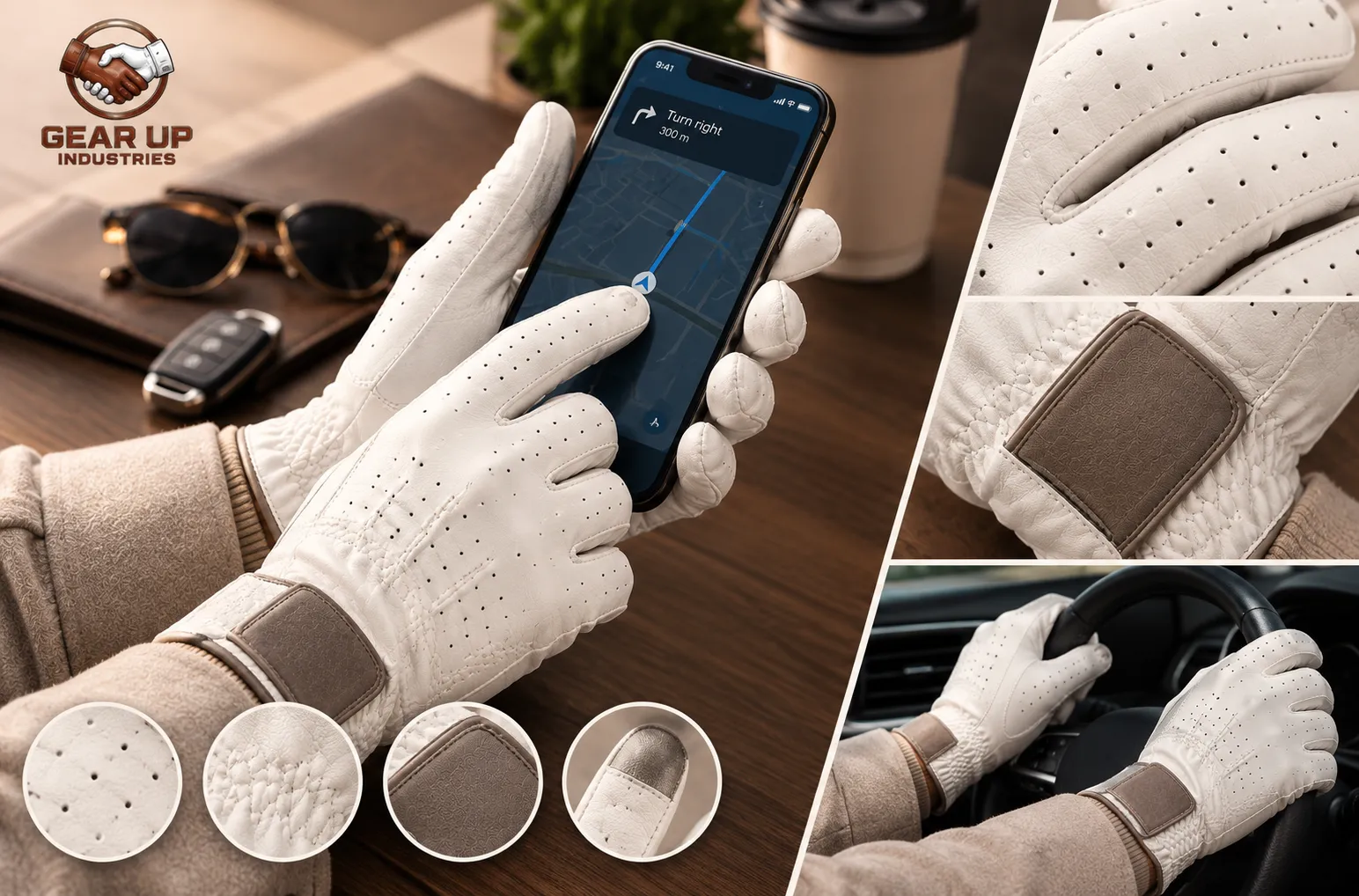
Before a pair of leather gloves clears customs, someone has to decide what they are in the language customs uses. That decision, the tariff classification, sets the duty rate and the paperwork, and sometimes decides whether the shipment is held for questions. For a brand importing golf or driving gloves, getting the HS code for leather gloves right is part of knowing the real landed cost.
This guide is for importers, brands, and wholesale buyers bringing leather gloves into the USA, UK, Europe, UAE, Canada, and Australia. It explains what a Harmonized System code is, where leather golf and driving gloves usually sit, how each country extends the code, what drives the duty you pay, and how CBP rulings and country of origin marking fit in. It does not state duty rates, because they depend on the exact national line, the origin, and the date of entry, and they change.
What Is a Harmonized System Code?
The Harmonized System (HS) is an international product classification maintained by the World Customs Organization and used by most trading countries. It gives every type of product a numeric code so that customs authorities around the world describe goods in the same way.
What an HS Code Does in Import and Export
In import and export, the HS code links a product to its duty rate, any trade preferences, statistical reporting, and any controls or restrictions. The exporter’s documents usually show a code, but in most countries the importer is responsible for the classification declared at entry. A supplier’s code is a useful starting point, not a guarantee.
How the Digits Are Structured
The first six digits are international. The first two give the chapter, the first four the heading, and all six the subheading. Each country then adds its own digits for duty and statistical purposes, so a full 8- or 10-digit code from one country cannot simply be copied into another country’s declaration.
The HS Code for Leather Gloves
Heading 4203: Leather Clothing Accessories
Gloves whose outer surface is leather or composition leather generally fall under heading 4203, which covers articles of apparel and clothing accessories of leather. Within that heading, gloves are split into two subheadings.
Sports Gloves vs. Other Gloves: 4203.21 and 4203.29
Subheading 4203.21 covers gloves specially designed for use in sports. Subheading 4203.29 covers other gloves, mittens, and mitts of leather. The test for 4203.21 is the glove’s design, not its marketing: it should have features that make it specifically suited to a sport.
Where Golf Gloves Usually Fit
Leather golf gloves are designed for gripping a club and are often considered under 4203.21 as sports gloves. The national line within that subheading varies by country, so confirm the full code for your product with a customs broker in the destination market.
Where Driving Gloves Usually Fit
Leather driving gloves are generally treated as other gloves under 4203.29, since driving is not usually treated as a sport for tariff purposes. National tariffs then subdivide 4203.29 by factors such as leather type, construction, and whether the glove is lined.
When a Glove Is Not Classified as Leather
Classification follows the material that forms the outer surface. A glove with a synthetic or PU outer is not a leather glove for tariff purposes and is classified under the heading for its actual material. Our guide to leather vs synthetic gloves explains the material differences that also matter here.
Mixed-Material Gloves Like Crochet-Back Styles
Crochet-back driving gloves combine a leather palm with a crocheted textile back. Knitted or crocheted gloves have their own textile heading, so a mixed construction may need a closer look at which material gives the glove its essential character. Treat these styles as a question for your broker rather than assuming 4203.
Writing a Description a Broker Can Classify
Give your broker a plain description covering:
- Glove type
- Outer surface materials and their proportions
- Leather type
- Lining
- Construction
- Any sporting design features
Matching the Invoice and Specification Sheet
Make sure the commercial invoice and your specification sheet describe the glove in the same way. When the two documents disagree, customs may question the entry even if the code itself is correct.
How National Tariffs Extend the Code
United States
The US uses the Harmonized Tariff Schedule (HTS). Within 4203.29, US lines distinguish gloves by factors including leather type, whether the glove is seamed, whether it is for men, and whether it is lined. Within 4203.21, lines are split by sport. Additional duties beyond the standard rate have changed frequently in recent years, so check the current position for your product and origin on the entry date.
European Union
The EU extends the six digits through the Combined Nomenclature and the TARIC database, which also shows measures, preferences, and controls for each line. Look up the line for the member state where the goods enter, and do not reuse a US or UK code.
United Kingdom
The UK applies its own tariff, searchable through the UK Trade Tariff service. Like the EU tariff, it separates protective gloves from other leather gloves, so a dress or driving glove is generally not classified as protective unless its design supports that.
Canada and Australia
Canada and Australia both use the six-digit HS and add their own national digits and rates. Canadian importers use the Customs Tariff, and Australian importers use the Working Tariff. Each country’s customs agency offers guidance and rulings.
UAE and the GCC
The UAE applies the GCC Common Customs Tariff shared with other Gulf Cooperation Council members. Confirm the line and any documentation requirements with a UAE clearing agent before shipment.
What Determines the Import Duty You Pay
Several factors decide the final duty on a glove shipment:
- The full national tariff line and its rate.
- The country of origin, proved by the right documents.
- Any preference scheme. Pakistan-origin goods have been eligible for EU GSP+ treatment and UK Developing Countries Trading Scheme preferences, subject to each scheme’s rules and proof of origin.
- Any additional duties or trade measures in force on the entry date.
- The customs value the rate is applied to, which differs by country in whether international freight and insurance are included.
Using CBP Rulings and Advance Rulings
Searching Existing CBP Rulings
US Customs and Border Protection publishes past classification decisions in its Customs Rulings Online Search System (CROSS). Searching for similar gloves shows how CBP has reasoned in earlier cases. A CBP ruling issued to another importer is guidance only, because it applies to the specific goods described in that ruling.
Requesting a Binding Ruling
For certainty before shipment, importers can request a binding ruling. The options include:
- US: a binding ruling from CBP.
- EU: a Binding Tariff Information decision.
- UK: an Advance Tariff Ruling.
- Canada: an advance ruling from the Canada Border Services Agency.
Each glove type generally needs its own application with a full description and, where requested, a sample.
Keeping a Customs Classification Record
For each glove style, keep a short record of:
- The code used.
- The tariff edition and the date it was checked.
- The broker who confirmed it.
- Any ruling reference.
- The specification it was based on.
If customs questions an entry later, that record shows how the decision was made, and it makes reorders faster.
Country of Origin Marking for Leather Gloves
Country of origin marking is separate from classification. In the US, imported articles generally must be marked with the English name of their country of origin in a legible, conspicuous, and reasonably permanent way. Leather gloves made in Pakistan are therefore typically marked “Made in Pakistan” on a label or on the glove itself.
Other countries set their own marking and labeling rules, so confirm the requirements for each destination. Our guide to logo embossing and branding for leather gloves covers woven labels, where origin is often shown.
Documents That Support Classification
Keep a consistent document set for every shipment:
- A commercial invoice with a clear product description.
- A packing list.
- The transport document.
- A certificate of origin or origin statement where preferences apply.
- Your specification sheet.
Our guide to bulk leather glove shipping explains how these documents fit into air and sea freight.
Common Classification Mistakes
- Copying a full national code from another country.
- Classifying from a product name or photo instead of the actual materials and design.
- Assuming a mixed leather-and-textile glove is automatically under 4203.
- Not rechecking when the leather, lining, or construction changes.
- Relying on an old invoice or tariff edition for a new shipment.
Working With Gear Up Industries
Gear Up Industries, a leather gloves manufacturer in Sialkot, produces leather golf and driving gloves for private label and OEM buyers, with sampling before bulk orders and MOQs starting from 100 pairs. When you request a quote, ask for a written description of the materials, lining, and construction of each style, so your broker can confirm the classification before you order.
Frequently Asked Questions
What is the HS code for leather gloves?
Leather gloves generally fall under heading 4203, with 4203.21 for gloves specially designed for sports and 4203.29 for other gloves. The full code depends on the destination country’s tariff.
Is the HS code the same in every country?
The first six digits are shared internationally. The digits after that are national, so the full code differs from country to country.
Who is responsible for the HS code on an import?
In most countries, the importer is responsible for the classification declared at entry, even if the supplier suggests a code.
Can I use a CBP ruling issued to another company?
It can guide your reasoning, but it only binds CBP for the goods described in that ruling. For certainty, request your own ruling.
Does adding a lining change the HS code?
Lining does not usually move a leather glove out of heading 4203, but some national tariffs use lining to separate lines, so it can change the full national code.
Final Thoughts
The HS code for leather gloves starts with heading 4203, but the full code, the duty rate, and the paperwork depend on the glove’s materials and design and on each destination’s tariff. Describe each style precisely, confirm the national line with a broker or a binding ruling, and recheck whenever the product or the rules change. When you are ready to source leather golf or driving gloves with clear product documentation, request a quote.