
Goatskin Leather Gloves: Grain, Strength and Best Uses

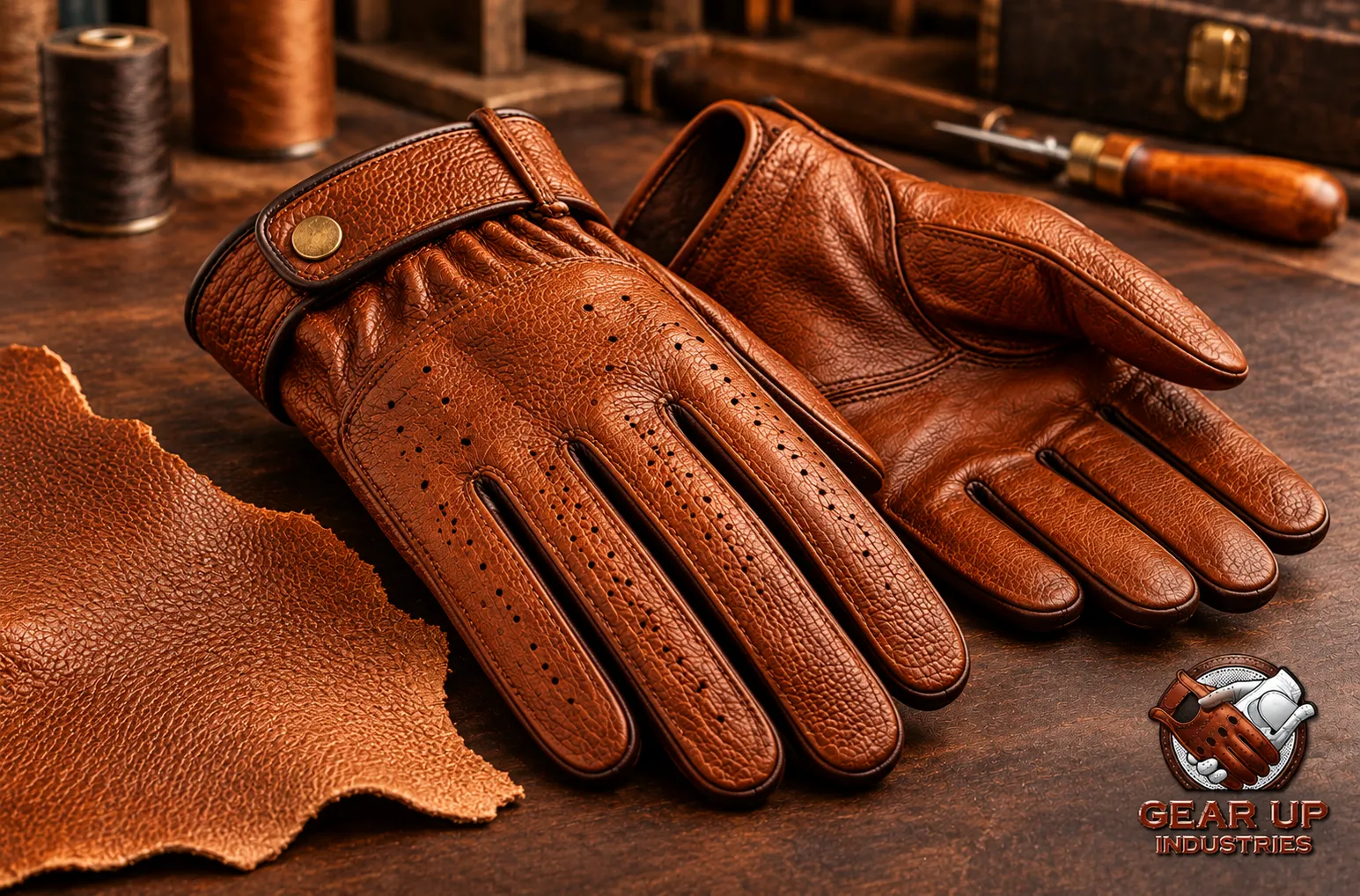
Goatskin shows up in more glove specifications than most buyers expect. Driving gloves, fashion gloves, and some golf styles are cut from it, and suppliers often describe goatskin leather gloves as soft, thin, and strong for their weight. Those descriptions are fair as far as they go, but they leave brands with practical questions. Is goatskin good for gloves? What does the grain look like? How thick should it be? What should a buyer write in a specification so the factory delivers what was approved?
This guide covers goatskin as a glove material: grain, strength, thickness, best uses, and how to specify it. It is written for glove brands, product developers, and retailers, mainly in the US, with notes for buyers sourcing for other markets.
What Goatskin Is and Why Glove Makers Use It
Goatskin is leather made from goat hide. Glove makers use it because the hides are relatively thin and flexible, and the leather is commonly described as strong for its thickness. That balance suits gloves that need to follow the hand closely, such as driving gloves, while still holding up to repeated flexing at the fingers and thumb. As with any leather, the real result depends on the individual hide, the tanning, the finish, the thickness, and how the glove is built.
Goatskin, Goat Hide, and Other Names
The same material is sold under several names. Goatskin gloves, goat skin gloves, and goat hide gloves all describe gloves made from goat leather. Capra leather is a material name based on Capra, the zoological genus that includes domestic goats. For shoppers, plain wording such as “goatskin leather” is clearest, while a supplier may use the other terms on documents.
Kidskin Gloves
Kidskin comes from young goats. It is traditionally associated with fine dress gloves because the skins are small and fine. The term is sometimes used loosely, so ask which animal the leather comes from before you repeat “kidskin” on a label.
Goat Leather Grain: What the Surface Looks Like
Goatskin typically has a fine natural grain, often described as slightly pebbled. How much of that natural surface a glove shows depends on the finish. A full grain surface keeps the natural pattern and its small marks. A corrected or embossed surface has been altered for a more uniform look. Neither is wrong, but each needs to be described accurately when you write a label or listing. Our guide to the genuine leather meaning explains how to word these claims.
Natural Variation Between Hides
Because goatskin is a natural material, grain character, shade, and small marks vary between hides and between lots. A single pair is usually cut from matched hide, but a reorder may come from a different lot. Agree in writing how much variation is acceptable, which panels need the cleanest surface, and what the approved sample shows.
Goatskin Durability and Strength: What to Expect
Strong for Its Thickness
Goatskin is commonly described as strong relative to its thickness, which is why it can be cut thin for close-fitting gloves without being fragile. Treat that as a general tendency, not a guarantee. Tanning, finishing, hide quality, and glove construction all change the result, and a poorly finished or badly stitched glove can fail early whatever the animal.
Goatskin Glove Thickness
Thickness is one of the most useful numbers in a goatskin specification. Suppliers quote different ranges, and published figures for glove goatskin often fall somewhere between about 0.5 and 1.0 mm, with thinner leather used where feel matters most. Thinner leather gives more feel and flexibility. Thicker leather gives more structure and more material at wear points, with less sensitivity. Specify a target and a tolerance in millimeters, and approve it on a physical sample. Our guide to leather thickness for driving gloves explains how thickness changes steering feel.
Wear Over Time
Leather gloves generally soften and conform to the hand with wear. With goatskin, expect the areas that see the most contact, such as the palm, the thumb base, and the finger seams, to polish or show wear first. Construction choices such as reinforced stress points, seam placement, and sensible thickness matter as much as the leather itself. Care also affects lifespan, so give customers simple guidance. Our leather care guide for driving gloves has wording retailers can adapt.
What Goatskin Does Not Guarantee
Goatskin is a material, not a performance rating. It does not by itself establish cut resistance, heat protection, chemical protection, or waterproofing. Water resistance depends mainly on finish and construction, and leather generally should not be described as waterproof. Keep claims to what you can test and document.
Best Uses for Goatskin Gloves
Driving Gloves
Driving gloves are the most natural fit for goatskin, because the style rewards a thin, flexible leather that follows the hand closely. Goatskin suits full-finger and fingerless patterns, perforated backs, and leather palms paired with knit backs. For US buyers, it works across a year-round driving range. Brands selling into hot markets such as the UAE or much of Australia often pair thin leather with unlined or perforated constructions, while UK and Canadian buyers may add lined styles for winter. See our full-finger leather driving gloves for the base product.
Golf Gloves
Golf gloves put a premium on feel, so many golf programs favor very thin sheep leathers. Goatskin can suit styles where a slightly more durable hand is wanted, and the right choice depends on the glove, the customer, and the sample. Our leather golf gloves page shows the range, and our comparison of sheepskin vs goatskin for bulk gloves covers how the two leathers differ.
Fashion and Dress Gloves
For fashion and dress ranges, goatskin and kidskin offer a fine surface and a close fit. Lining, color, and finish usually do most of the positioning work in these styles.
When Goatskin May Not Be the First Choice
Goatskin is not the answer to every brief. Heavy-duty protective gloves are specified by hazard and tested performance, not by leather species. A brand chasing the softest possible hand feel may prefer a different leather after sampling. A heavier, more structured glove may call for thicker material. Let the sample, not the material’s reputation, decide.
Goatskin and Other Glove Features
Goatskin works with most glove features, but a few need planning before sampling.
Perforation
Holes remove material from thin leather, so confirm the clearance between the perforated area and each seam or edge on the sample. Keep holes away from the points that carry the most stress.
Embossing and Branding
Logos can read differently on a grain surface than on a smooth one. Test the logo size and depth on the actual leather before approving it. Our guide to logo embossing and branding for leather gloves compares the methods.
Touchscreen Fingertips
Conductive treatments and threads should be tested on the finished glove, because the leather, lining, and fit all affect response. Our guide to touchscreen driving gloves explains the manufacturing options.
How to Specify Goatskin in a Glove Brief
A clear specification prevents most misunderstandings before sampling begins.
Write the Leather Line Precisely
Name the leather first, then the details that make it checkable.
Name the Leather and Surface
Write “goatskin leather” and state whether the surface is full grain, corrected, or finished, along with the color reference. Avoid relying on “genuine leather” alone.
Set Thickness and Tolerance
State the thickness range in millimeters with a tolerance. If different panels need different thickness, list them separately.
Approve It on a Physical Sample
Judge softness, grain, color, and fit on the sample, and keep it as the reference for bulk. Record what natural variation is acceptable. Photos and descriptions cannot replace the leather itself.
Add Fit and Quality Checks
Check that the sample fits across sizes, the seams hold at stress points, and the bulk leather matches the approved sample. Our leather glove buying checklist for wholesale buyers covers the wider specification.
Questions to Ask About Goatskin Supply
Before you approve a sample, ask the supplier:
- Which goat leather is offered for this style, and is the surface full grain, corrected, or finished?
- What thickness range and tolerance can you hold?
- How do you match leather and shade between lots?
- Can you provide a written description of the leather for this exact style?
- Will the bulk leather match the approved sample, and what natural variation should I expect?
Working With Gear Up Industries
Gear Up Industries is a factory-direct leather gloves manufacturer in Sialkot, Pakistan. It produces leather golf and driving gloves for private label and OEM buyers, with logo branding, custom colors, sizes, and packaging. Sampling is available before bulk orders, and MOQs start from 100 pairs. If you want to evaluate goatskin for a style, tell us the glove type, your target market, and the feel you want, and ask for a written description of the leather, surface, and thickness range for each style you sample.
Frequently Asked Questions
Is goatskin good for gloves?
For many styles, yes. Goatskin is thin, flexible, and commonly described as strong for its thickness, which suits driving, fashion, and some golf gloves. The result still depends on the hide, finish, thickness, and construction, so judge it on a sample.
Is goatskin strong?
It is commonly described as strong relative to its weight, but strength varies with tanning, finishing, and glove construction. Goatskin does not by itself provide a cut, heat, or chemical protection rating.
What is the difference between goatskin and kidskin?
Kidskin comes from young goats and is traditionally used for fine dress gloves. Goatskin is the broader term for goat leather. Ask a supplier which animal the leather comes from.
Is goatskin waterproof?
No. Water resistance depends mainly on finish and construction, and leather gloves should not be described as waterproof without testing.
How thick is goatskin glove leather?
Suppliers quote different ranges, often somewhere between about 0.5 and 1.0 mm for gloves. Specify a thickness range in millimeters with a tolerance and approve it on a sample.
Final Thoughts
Goatskin is a strong candidate for gloves that need to follow the hand closely, especially driving and fashion styles, but the material’s reputation should not replace a specification. Name the leather, describe the grain and surface, set a thickness range with a tolerance, and approve it on a physical sample. Then describe the finished glove with claims you can support. When you are ready to evaluate goatskin for your next range, request samples or a quote.