
Hand Gloves Cutting Pattern & Sewing Guide: Fit Explained

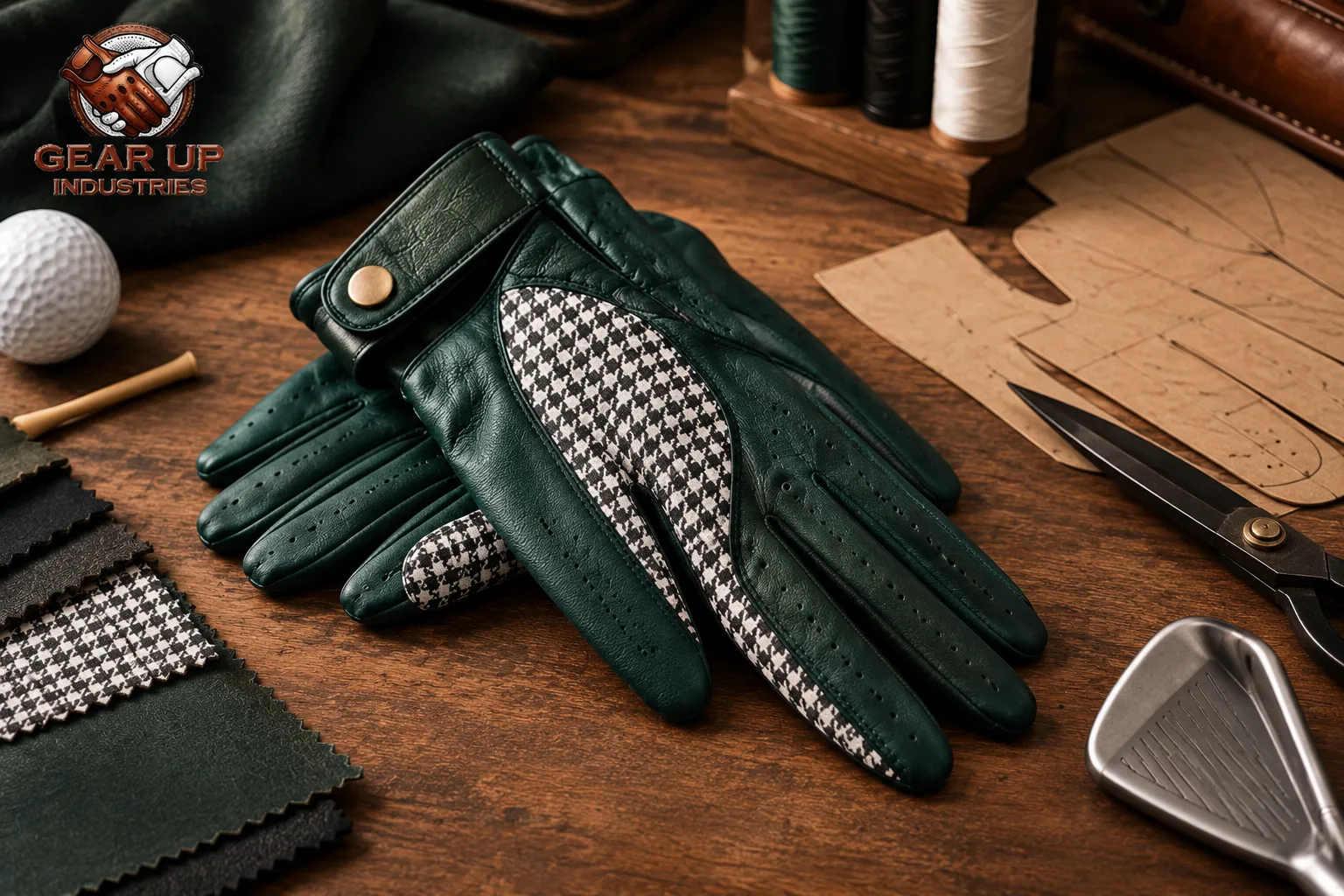
A leather glove can use excellent leather and neat stitching and still fail if the pattern is wrong. Fingers that are too long, a thumb that pulls across the palm, or a back that bunches when the hand closes all trace back to how the hand gloves cutting pattern was drafted and how the pieces were sewn.
This guide is for glove brands, designers, and wholesale buyers in the USA, UK, Europe, UAE, Canada, and Australia who want to understand what happens between an approved design and a finished glove. It explains the pieces of a glove pattern, how factories cut and sew leather, how patterns differ for driving, fingerless, and golf gloves, and how the pattern controls fit. For the full production journey, from hide selection to inspection, see our guide to how leather gloves are made.
What a Glove Cutting Pattern Includes
A basic glove pattern is a set of shaped pieces that together wrap a three-dimensional hand. Each piece has a job, and changing one usually affects the others.
The Trank
The trank is the main hand piece, covering the palm, the back of the hand, and the fronts and backs of the fingers. It sets the overall hand width, finger length, and cuff opening, so most fit decisions start here.
Fourchettes and Quirks
Fourchettes are the narrow strips sewn along the sides of the fingers. They give each finger depth so it can bend without pulling.
Quirks are small gusset pieces set at the base of the fingers, where the fourchettes meet. They add movement at the point where the hand flexes most. Simpler patterns may combine or leave out quirks, which can make a glove cheaper to sew but slightly less free at the finger base.
The Thumb
The thumb is cut as a separate piece and set into an opening in the trank. Its shape and position decide whether the glove allows a natural grip or pulls across the palm when the hand closes around a steering wheel or club.
Common Thumb Constructions
Traditional leather glove making uses several thumb styles, including the one-piece Bolton thumb and quirked thumbs with an extra gusset for movement. The right choice depends on the glove’s purpose, leather, and price point, so ask the factory which construction it recommends for your design.
Points, Cuffs, and Closures
Points are the decorative stitch lines on the back of many dress and driving gloves. The cuff and the closure, whether a snap, a strap, or an open wrist, complete the pattern.
In retail, “patterned leather gloves” usually means decorative surfaces such as perforation, embossing, or contrast stitching. That is different from the cutting pattern discussed here.
How Factories Cut Leather Glove Patterns
Table Cutting by Hand
In traditional table cutting, a skilled cutter works the leather on a table, judging its stretch and surface before marking and cutting each piece. The leather is often dampened and worked by hand so the cutter can judge and set its stretch. This method lets the cutter respond to each individual skin, which is valuable for fine leathers and small runs.
Die Cutting for Repeat Production
For repeat production, many factories use steel dies shaped to each pattern piece, with a press to cut them. Dies help keep pieces consistent across a bulk order, but each size and style needs its own set, so they make most sense once a pattern is approved.
Stretch Direction and Hide Placement
Leather stretches more in one direction than the other. Glove makers generally place pieces so the glove can give across the width of the hand while holding its length, which keeps fingers from growing longer with wear. Cutters also position pieces to avoid scars and thin areas, saving the cleanest leather for the back of the hand, where marks are most visible.
How a Leather Glove Is Sewn
Typical Sewing Sequence
Sewing order varies by factory and style, but a leather glove is often assembled in this general sequence:
- Set the thumb into the trank.
- Attach the fourchettes and any quirks along the fingers.
- Close the fingers and the side seam.
- Finish the cuff with a hem, binding, or facing.
- Add closures, snaps, or straps.
- Shape and finish the glove.
Seam Choice
The seam type affects appearance, comfort, and how the fingers feel against the hand. Inseams hide the seam inside the glove, while outseams and piqué seams leave the edge visible. Our guide to leather glove stitching types compares them in detail.
Lined and Winter Gloves
For winter gloves, the lining is usually made as a separate inner glove, then inserted and attached at the fingertips or cuff. The outer pattern needs extra room to accommodate it, so a lined version of an unlined style is effectively a new pattern.
That matters for brands selling the same design in winter in Canada, the northern US, or the UK and year-round in warmer markets like the UAE. Our guide to lined vs unlined driving gloves explains the trade-offs.
Pattern Differences by Glove Type
Leather Driving Gloves Pattern
A leather driving gloves pattern is usually close-fitting and often unlined. It may include knuckle holes, an open or keyhole back, and a short wrist with a snap. Because the hand grips and releases constantly, the finger and thumb shapes matter more than decorative details. See our full-finger leather driving gloves for the base product.
Fingerless Leather Glove Pattern
A fingerless leather glove pattern shortens each finger to a set length, usually around the middle knuckle, and finishes the openings with a hem or binding. Specify the finished length and edge treatment clearly, because both affect comfort and appearance. Our fingerless leather driving gloves show the style.
Golf Glove Patterns
Golf gloves are usually sold for one hand, use thin leather, and are cut for a very close fit with a wrist closure. Patterns need separate left- and right-hand versions where both are offered, and size runs often include cadet options in the US market. Grip zones and closure tab placement are also set in the pattern. See our leather golf gloves for the product range.
How the Pattern Controls Fit
Measurements Behind the Pattern
A pattern is drafted from hand measurements, mainly hand circumference and hand length, plus individual finger lengths. Our leather glove sizing chart for wholesale buyers explains how to take and record them in inches and centimeters.
Grading Across Sizes
Grading turns one approved size into a full size run. Fingers, palm width, and thumb position do not all change at the same rate, so a pattern that is simply scaled up or down often fits badly at the ends of the range. Men’s and women’s patterns should be graded separately.
Leather Thickness and Ease
Thicker or firmer leather takes up more room inside the glove, so the same pattern can feel tighter in a heavier leather. Softer leathers relax more with wear. Our article on leather thickness for driving gloves covers how thickness changes fit and feel.
Fit Checks on the First Sample
Check the sample on real hands across several sizes. Look for:
- Fingertips that sit at the end of the glove without excess.
- A thumb that does not pull across the palm when gripping.
- A back that stays smooth when the hand closes.
Record every change against the pattern version.
Left and Right Hands
Left and right gloves are cut from mirrored pattern pieces, and small differences between them show up quickly in wear. When checking samples, compare the pair side by side and on both hands, not just one glove.
Size Systems Your Customers Expect
Size labeling varies between markets. US retail often uses letter sizes such as S to XL, while numbered sizes are common for dress gloves in the UK and Europe. Decide your size system before grading, so the pattern, the labels, and your product pages all match.
Prototyping a Glove Sewing Pattern Before Sampling
Some designers learn how to sew a glove themselves to make a rough prototype before briefing a factory. Tracing a well-fitting glove, cutting a test version in inexpensive material, and sewing it by hand or machine can reveal problems with finger length or thumb position early.
A home-sewn toile is not a production pattern, but it gives the factory a clearer starting point than a sketch alone. For winter styles, prototype the lining separately as well, because it changes how the outer glove fits.
Working With Gearup Industries
Gearup Industries is a leather gloves manufacturer in Sialkot offering custom design development for golf and driving gloves, along with logo branding, custom colors, sizes, and packaging. Sampling is available before bulk orders, and MOQs start from 100 pairs.
Share a reference glove, sketch, or measurements, and agree on the pattern through the sampling process. If you are moving production from another factory, send your existing approved sample so the new pattern can be checked against it.
Frequently Asked Questions
Can a factory develop a pattern from a glove I already own?
Often, yes. A reference glove gives the factory a fit and construction starting point. Tell them which details must match and which can change.
Who owns a custom glove pattern?
Ownership depends on your agreement with the factory. If it matters to your brand, agree on it in writing before development begins.
Can one pattern work for men’s and women’s gloves?
Usually not well. Hand proportions differ, so separate patterns and grading generally give a better fit.
How many sample rounds does a new pattern need?
It varies with the complexity of the design. Plan for at least one revision on a new pattern, especially for close-fitting driving and golf gloves.
Does a new leather type need a new pattern?
Sometimes. A change in leather thickness or stretch can alter the fit, so sample the existing pattern in the new leather before approving it.
Final Thoughts
The pattern is where a glove’s fit is decided. The trank, fourchettes, quirks, and thumb all need to work together, and the leather, cutting method, and sewing sequence then turn that pattern into a finished glove. Approve the pattern on real hands across the size run before bulk production begins. When you are ready to develop a custom leather glove, share your design and request samples.