OEM vs ODM Leather Gloves: Which Model Fits Your Brand?

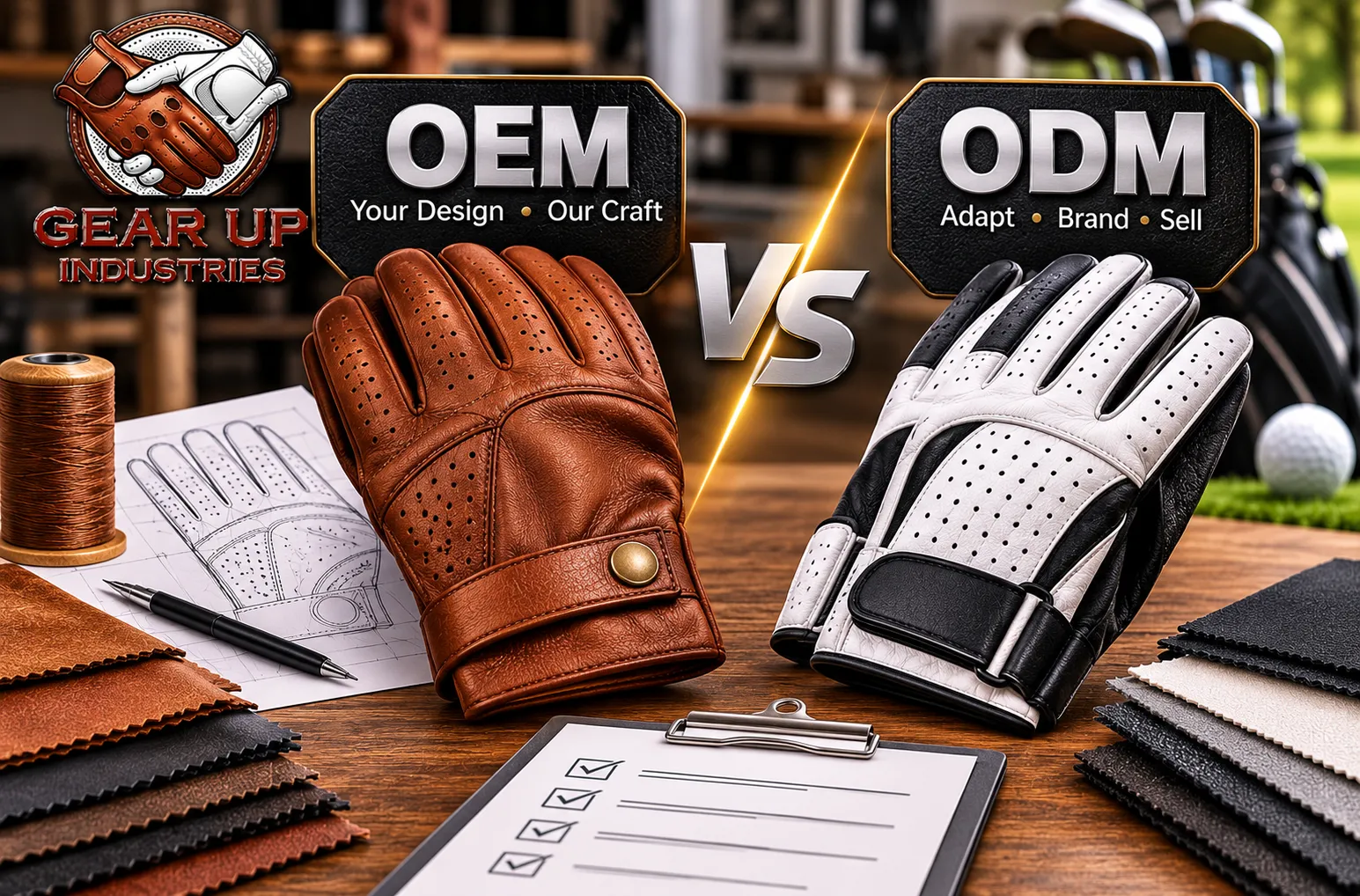
Two terms dominate conversations between glove brands and factories, and they are used loosely enough to cause real misunderstandings. OEM and ODM both mean that a factory makes gloves that a brand sells under its own name. The difference is who creates the design, and that single difference shapes how much development you carry, how distinctive the glove can be, who holds the patterns, and what happens if you want to change suppliers.
This guide explains OEM vs ODM leather gloves in practical terms: what each model means, how they differ, who owns what, and how to choose for a golf or driving glove range. It is written mainly for US brands, retailers, clubs, and product developers, with notes for buyers launching in other markets. It is general information, not legal advice.
What OEM and ODM Mean for Leather Gloves
OEM Gloves Meaning
OEM stands for original equipment manufacturer. In gloves, the brand supplies the design and the specification: the style, the pattern or fit requirements, the leather, the lining, the construction details, the branding, and the packaging. The factory builds the glove to that specification, and the brand sells it under its own name. The brand carries the design work, and usually the sampling effort that comes with it.
ODM Leather Gloves
ODM stands for original design manufacturer. The factory already has designs, patterns, and construction methods. The brand picks a base style from the factory’s range and adapts what it can, such as the leather, color, lining, logo, labels, and packaging. The factory carries more of the design work and the brand carries less. ODM leather gloves can reach a launch with less development, but the base design may also be available to others.
Why the Terms Blur in Practice
Factories use OEM, ODM, and private label differently, and many projects sit in between: a factory’s existing pattern with custom changes to the leather, trim, and fit. Whatever label a quote uses, write down who designs what, who owns what, and what can be changed. Our guide to choosing an OEM or private label glove factory covers how OEM compares with private label.
OEM vs ODM Leather Gloves: Key Differences
| Factor | OEM | ODM |
| Starting point | The brand’s design and specification | The factory’s existing design |
| Design control | High: the brand decides pattern, materials, and construction | Limited to what the factory lets you adapt |
| Development effort | More: specification, pattern work, and sampling rounds | Less: the base design already exists |
| Differentiation | Easier to make the glove distinctive | Harder, because the base design may be shared |
| Exclusivity | Depends on the agreement | Not automatic; negotiate it |
| Main risk | Investing in a design that does not sell | Sharing a base design, and depending on the factory |
What You Send and What the Factory Does
The difference between OEM and ODM shows up in the work each side does. With OEM, you send a brief: drawings or a reference glove, a leather and lining specification, size and measurement details, branding, and packaging. The factory reviews feasibility, develops samples, and revises them until you approve a reference. With ODM, you review the factory’s existing styles and samples, choose a base, and send your adaptations. Either way, an approved physical sample should become the production reference.
Who Owns the Design?
Ownership Depends on the Agreement
Common summaries say the brand owns an OEM design and the factory owns an ODM design. That is a useful starting point, not a rule. Paying a factory to make or customize gloves does not automatically transfer ownership of every pattern or improvement made along the way. Ownership, licenses, and exclusivity should be written into your agreement, and a lawyer familiar with the relevant countries should review it. Ask for each clause to be explained in plain language before you sign.
Patterns, Cutting Dies, and Samples
In glove making, the pattern and the cutting dies carry the design. Agree who owns them, who stores them, and whether they can move to another factory. Cutting dies are the shaped steel cutters some factories use for repeat production, and they often stay at the factory unless the agreement says otherwise. Also agree what happens to approved samples and any custom components.
Exclusivity With ODM Designs
If you adapt a factory’s base design, ask whether the factory can sell the same base, or a close variant, to others. If exclusivity matters, negotiate it in writing, and say what it covers: the specific version, a territory, a sales channel, or a period of time.
Protecting Designs in Different Markets
Intellectual property rights are generally territorial. A brand launching in the US and later in the UK, the EU, the UAE, or Australia should check what protection exists in each place and seek advice from an IP professional. This matters more as a brand’s designs become more distinctive.
Which Model Fits Your Brand?
Start from the product you want, not from the label.
When OEM Makes Sense
- You have a distinctive design, fit, or detail the market does not offer.
- Your brand’s identity depends on the glove itself.
- You can prepare a clear specification and plan for sample rounds.
- Design control and the ability to move factories matter to you.
When ODM Makes Sense
- You want to test a market before investing in custom development.
- You lack in-house design or pattern resources.
- Your brand’s strength is marketing, community, or distribution.
- An existing style, adapted with your leather, color, and branding, meets your need.
A Hybrid Path: Start From an Existing Base
Many brands start by adapting an existing base design, then develop their own signature styles once they know what customers buy. That is a common path, not a rule, and it works best when the early agreement already addresses ownership and a later move. Our B2B sourcing guide for custom leather gloves covers the wider sourcing process.
How the Choice Affects Your Brand Story
The model also shapes what you can truthfully say about your gloves. A brand that develops its own pattern and specification can talk about its design process. A brand that adapts a factory’s base design is better served by talking about its leather choices, finishes, fit testing, and service. Avoid describing a glove as designed by your team if the base design came from the factory, because customers, retailers, and competitors may ask.
Golf and Driving Glove Examples
A golf club or academy ordering logo gloves for members often needs an adapted existing style, with its own colors, logo, and packaging. Our guide to custom golf gloves for clubs and academies covers that case. A car club ordering branded driving gloves faces the same choice, which we cover in our guide to custom branded driving gloves for car clubs. A fashion label with a signature fit may need OEM development instead.
What Each Route Needs From You
The OEM Brief
Treat the brief as the product’s instruction manual.
Build the Specification
Include drawings or a reference glove, the leather type and thickness range, the lining, the construction, the hardware, and the branding.
Define Fit and Pattern
State the hand measurements, finger lengths, size run, and left and right requirements. The pattern is where fit is decided, as our glove cutting pattern guide explains.
Approve a Reference Sample
Judge the sample in the hand, record the corrections, and keep the approved pair as the production reference.
The ODM Brief
Review the factory’s existing styles, ask for unbranded samples, and list the changes you want and the ones that are not allowed. Confirm what exclusivity, if any, applies to your version before you commit.
How Far an ODM Base Can Be Adapted
Most ODM projects can change the leather, color, lining, logo, labels, closures, and packaging. Changes to the pattern itself, such as finger length, palm width, or a new thumb construction, push a project toward OEM development, because they require new pattern work and new samples. Ask early which changes the factory treats as simple adaptations and which count as new development.
Cost, Timing, and Order Size: What Varies
Published claims about OEM and ODM timelines, costs, and minimums vary widely, and many come from other industries. For leather gloves, the real figures depend on the leather, the pattern work, the number of sample rounds, and the factory’s own terms. Ask for specifics for each style in writing. Minimum order quantities also vary by factory and project, and our guide to low-MOQ leather gloves explains how to think about them.
Common Mistakes When Choosing a Model
Most problems come from a few repeated assumptions:
- Assuming that OEM means you own every pattern and improvement, without a written agreement.
- Choosing ODM without asking for an unbranded sample of the base design.
- Sending a vague specification and expecting the factory to fill the gaps.
- Skipping exclusivity, then finding the same base style sold elsewhere.
- Changing the specification after the sample is approved, which usually means new samples and new costs.
Keeping Consistency Across Reorders
Whichever model you choose, the approved sample and the written specification are what keep reorders consistent. Leather lots, thread, linings, and hardware can change between orders, so keep the approved pair, record the specification, and ask the factory how it matches materials from one order to the next.
Questions to Ask a Factory Before You Choose
Whether you call the supplier a gloves maker, a factory, or a manufacturer of hand gloves, the questions are the same:
- Do you work from buyer designs, existing designs, or both?
- Can I see existing styles and unbranded samples?
- What can I customize, and what is fixed?
- Who owns the patterns, cutting dies, and custom components?
- Can you offer exclusivity for my version, and what would it cover?
- Can approved patterns and specifications move to another factory?
- How are samples approved and revisions handled?
- How do you protect my designs and artwork?
Working With Gear Up Industries
Gear Up Industries is a factory-direct leather gloves manufacturer in Sialkot, Pakistan. It describes its services as OEM and private label production with custom design development, covering logo branding, custom colors, sizes, and packaging, for leather golf gloves and leather driving gloves. Sampling is available before bulk orders, and MOQs start from 100 pairs. Factories use the term ODM differently, so tell us whether you are bringing a design or want to adapt an existing one, and ask what existing designs and patterns can be adapted for your range.
Frequently Asked Questions
What is the difference between OEM and ODM?
With OEM, the brand supplies the design and specification and the factory builds to it. With ODM, the factory supplies the base design and the brand adapts and brands it.
What does OEM mean for gloves?
OEM means original equipment manufacturer. For gloves, it usually means the factory produces gloves to the buyer’s design and specification, sold under the buyer’s brand.
Is ODM the same as private label?
Not always. Factories use the terms differently, so confirm what a quote includes: who designs the glove, what can be changed, and who owns the patterns.
Who owns the design in ODM?
Usually the factory keeps the base design, but ownership depends on the agreement. Settle ownership, exclusivity, and pattern rights in writing.
Should a new glove brand choose OEM or ODM?
It depends on the product. A brand testing a market often adapts an existing base design, while a brand built around a distinctive glove may need OEM development.
Can I move from ODM to OEM later?
Many brands do. Plan for it early by agreeing who owns the patterns and whether specifications can move to another factory.
Final Thoughts
OEM and ODM describe who designs the glove, and that choice shapes control, distinctiveness, and risk. OEM gives a brand more control and more work. ODM reduces development and can limit differentiation. Neither label is enough on its own, so write down what you design, what the factory designs, who owns the patterns, and what exclusivity you need before you order. When you are ready to develop a leather glove range, request samples or a quote.