

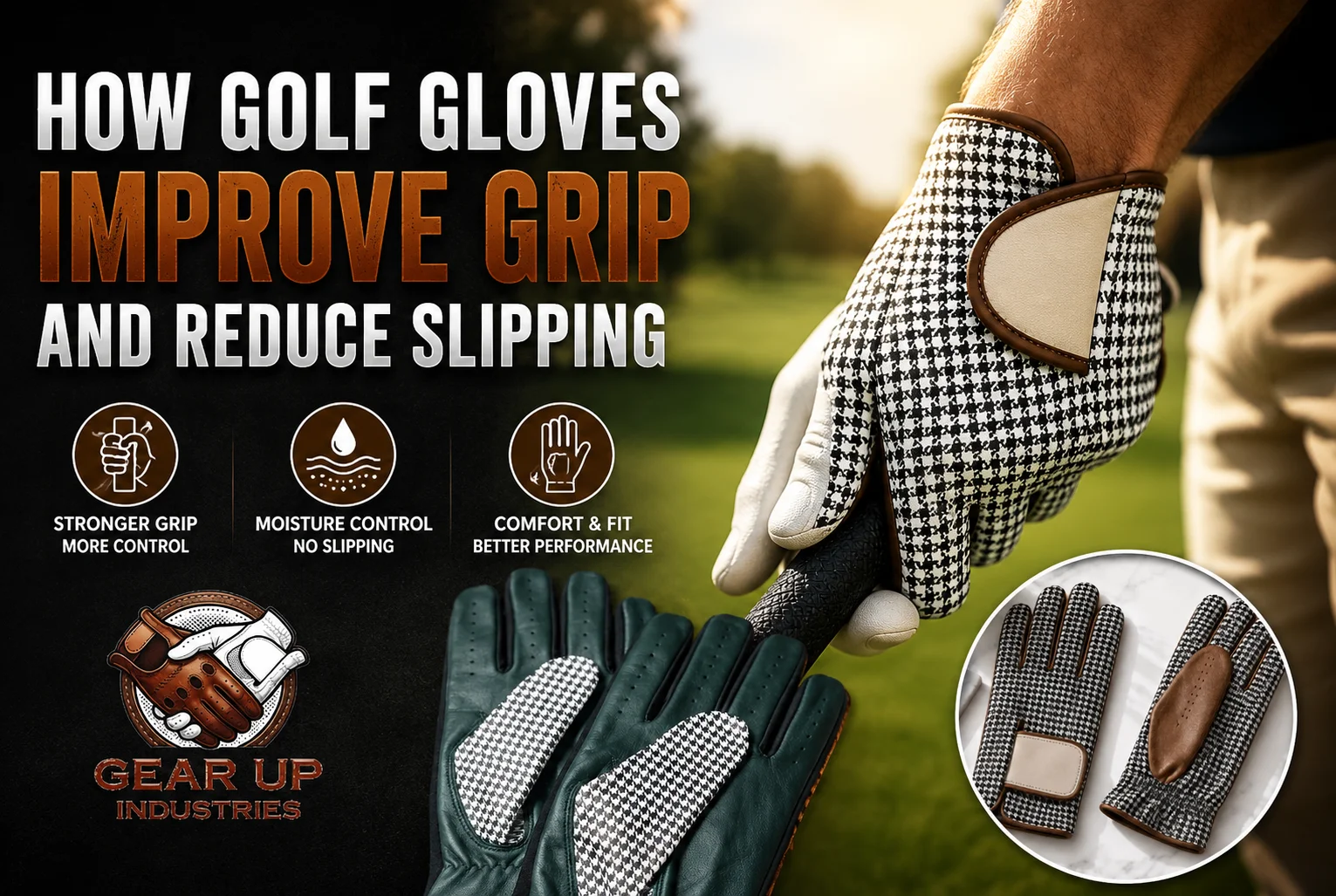
A golf glove may look like a simple piece of equipment, but it plays an important role in how a golfer connects with the club. A properly fitted glove can help improve comfort, manage moisture, reduce unwanted movement between the hand and grip, and create a more secure feeling throughout the swing.
For beginners, achieving a proper grip on a golf club can feel difficult. For experienced players, sweat, humidity, worn grips, or an incorrectly sized glove can affect consistency.
A golf glove cannot fix poor swing mechanics, but it can provide valuable golf grip help by improving the connection between the golfer’s hand and the club.
This guide explains how golf gloves improve grip, why slipping happens, what features affect performance, and how golfers and golf brands can choose the right glove.
Why Is Grip Important in Golf?
The connection between the hands and the golf club affects control throughout the swing.
A golfer needs to hold the club securely enough to maintain control without gripping it so tightly that unnecessary tension develops in the hands and arms.
The goal is not simply to create the strongest possible grip. Instead, golfers need a stable and repeatable connection.
A Secure Grip Supports Better Club Control
When the hands move unexpectedly on the club, the golfer may feel less confident during the swing.
Moisture, worn equipment, poor glove fit, or inconsistent hand placement can all contribute to unwanted movement.
A golf glove can add another layer between the hand and the grip while helping create more consistent contact.
Grip Is About Stability, Not Excessive Pressure
A common mistake is trying to prevent slipping by squeezing the club too tightly.
Excessive grip pressure can create tension and make the hands feel less relaxed.
A properly fitted glove is designed to help create a secure connection without requiring the golfer to rely only on additional hand pressure.
The Right Equipment Supports a Proper Hand Position
A golf glove cannot replace proper technique.
Golfers still need to learn the proper hand grip for golf, including hand placement and appropriate pressure.
However, when the glove fits correctly and remains stable on the hand, it can make the connection with the club feel more consistent.
A Glove Should Support, Not Replace, Good Technique
For beginners, it is important to understand that a glove is not a solution for every grip or swing problem.
A golf glove can support comfort and stability, but instruction and practice are still necessary for developing a repeatable swing.
This is particularly important when learning the relationship between golf grip and swing for beginners.
How Do Golf Gloves Improve Grip?
Golf gloves can help improve grip through a combination of material, fit, surface contact, and moisture management.
They Create a More Consistent Contact Surface
Bare hands can become sweaty, especially during warm weather or long rounds.
Sweat can reduce the consistency of contact between the hand and the club grip.
A glove can help create a more controlled surface between the hand and the club.
The effectiveness will depend on:
- Glove material
- Fit
- Palm construction
- Moisture level
- Condition of the glove
- Condition of the club grip
They Help Manage Moisture
Hands naturally sweat during play.
When moisture builds up, the golfer may feel less secure holding the club.
A well-designed glove can help manage this issue by providing a material layer that maintains a more consistent feel.
However, no standard glove will perform identically in every weather condition.
Humidity, temperature, rainfall, and the amount of perspiration can all affect performance.
They Reduce Unwanted Hand Movement
A correctly sized glove should fit closely around the palm and fingers.
When there is excess material, the glove may bunch or move during the swing.
This can reduce the golfer’s sense of connection with the club.
A close fit helps the glove move with the hand instead of shifting independently.
Why Do Hands Slip on a Golf Club?
Slipping is not always caused by one problem.
Several factors can contribute to reduced grip stability.
Sweat and Humidity
Warm weather can increase perspiration.
When the hand becomes wet, maintaining consistent contact with the club may become more difficult.
Golfers playing in hot or humid environments may need to pay more attention to glove condition and moisture management.
An Incorrectly Sized Golf Glove
A loose glove can create folds and movement.
A glove that is too tight may restrict movement and become uncomfortable.
The best fit is generally close and secure without excessive pressure.
A Worn Golf Glove
Over time, repeated friction can affect the condition of the palm and fingers.
Once the material becomes worn, stretched, or damaged, it may no longer provide the same feel.
Replacing worn equipment can help maintain a more consistent experience.
A Worn Club Grip
The condition of the golf club itself also matters.
Even the best gloves for grip cannot completely compensate for a club grip that is heavily worn or poorly maintained.
For consistent performance, golfers should evaluate both the glove and the club grip.
What Makes a Golf Glove Good for Grip?
The best glove for one golfer may not be the best choice for another.
The right option depends on playing conditions, comfort preferences, frequency of play, and the desired feel.
Material Choice
Leather and synthetic materials can offer different characteristics.
Leather, particularly premium materials such as Cabretta, is often valued for its soft feel and close connection with the club.
Synthetic materials may offer different benefits related to durability, maintenance, or specific weather conditions.
For a detailed explanation of premium leather used in golf gloves, read our guide on What Is Cabretta Leather and Why Is It Used in Golf Gloves?.
Palm Construction
The palm is one of the most important areas because it experiences direct contact and friction.
Construction details can influence:
- Contact with the club
- Flexibility
- Comfort
- Material movement
- Overall durability
A well-designed palm should support natural hand movement while maintaining a secure feel.
Accurate Fit
A golf glove that helps with grip should fit like a second skin.
There should not be large areas of loose material around the palm or fingertips.
For brands developing golf gloves, accurate sizing is also important because even high-quality materials can perform poorly when the fit is inconsistent.
Does the Type of Golf Grip Affect the Role of a Glove?
Yes. Different golfers use different hand positions and grip styles.
These golf grip differences can influence where friction and pressure occur on the hand and glove.
Grip Style Can Change Wear Patterns
Golfers may notice wear in different parts of a glove depending on their grip pressure, hand position, and swing.
For example, repeated friction in one area may cause the glove to wear faster.
This does not automatically mean the glove is defective.
Wear patterns can sometimes provide useful information about how the golfer holds the club.
Choosing the Right Golf Grip Is Still Important
When choosing a golf grip, golfers should consider their comfort, instruction, and ability to repeat the hand position.
The glove should work with the golfer’s established grip rather than force an unnatural hand position.
A glove is a performance accessory, while grip technique should be developed through proper practice or coaching.
How Can Beginners Use Golf Gloves More Effectively?
For new golfers, equipment can sometimes feel confusing.
The focus should remain on learning a comfortable and repeatable grip rather than expecting a glove to solve every problem.
Start With a Comfortable Fit
A beginner should first make sure the glove fits properly.
Look for:
- A close fit
- Minimal excess material
- Comfortable finger length
- Secure wrist closure
- Natural hand movement
Practice Consistent Hand Placement
A glove can provide useful feedback.
If the glove repeatedly twists or shifts during practice, the golfer may need to check the fit or how the club is being held.
Developing a consistent golf grip for beginners takes practice, and the glove should support that learning process.
Monitor Where the Glove Wears
Over time, check the palm, thumb, and fingers.
Repeated wear in specific areas may indicate high friction.
A golf instructor may be able to help determine whether grip pressure or hand placement is contributing to the pattern.
Golf Gloves and Different Playing Conditions
Playing conditions can influence which glove characteristics are most useful.
Hot and Humid Weather
Sweat management becomes more important in warm conditions.
Golfers may benefit from rotating gloves and allowing each one to dry between use.
Material selection, ventilation, and glove condition can all affect comfort.
Dry Conditions
In dry weather, many golfers may prioritize soft feel and direct club feedback.
Premium leather gloves can be popular in these conditions because of their flexibility and close fit.
Wet Conditions
Standard golf gloves may not provide the same performance when exposed to heavy rain.
For consistently wet conditions, golfers may prefer gloves specifically designed for rain or moisture-heavy environments.
How to Choose the Right Golf Glove for Better Grip
Choosing the right golf grip involves technique, but choosing the right glove requires evaluating the product itself.
Before selecting a glove, consider the following factors.
Think About Your Playing Conditions
Ask yourself:
- Do you usually play in hot weather?
- Do your hands sweat heavily?
- Do you play frequently?
- Do you need a premium feel?
- Do you need additional durability?
- Are you playing mainly in dry or wet conditions?
The answers can help narrow down suitable glove options.
Prioritize Fit Before Appearance
A visually attractive glove will not provide its intended performance if it fits poorly.
Always consider sizing and hand shape before choosing colors or branding.
Match the Material to Your Needs
A premium leather glove may be ideal for golfers who value softness and direct feel.
Other players may prioritize durability or specific weather performance.
The right product depends on how and where the glove will be used.
What Should Golf Brands Consider When Developing Grip-Focused Gloves?
For golf brands, creating a glove that supports grip performance involves more than selecting an attractive material.
The complete product specification should be considered.
Test Material and Construction Together
During product development, evaluate how the material performs after it has been cut and assembled into a finished glove.
Consider testing:
- Fit
- Palm feel
- Flexibility
- Stitching
- Material movement
- Comfort
- Wear patterns
A material sample alone cannot show how the finished glove will perform.
Develop Clear Size Specifications
Consistency is important for repeat production.
A golf glove manufacturer should work with approved measurements and size specifications.
This helps reduce variation between production orders.
Use Physical Samples Before Bulk Production
Before placing a larger order, brands should evaluate a physical sample.
The sample can help identify issues with fit, material selection, branding, or construction.
For a complete overview of custom and wholesale product development, see our Ultimate Wholesale Custom Leather Golf Gloves Sourcing Guide.
How Gearup Industries Supports Golf Glove Development
Gearup Industries is a leather gloves manufacturer based in Sialkot, Pakistan, with more than 16 years of industry experience.
We work with international brands, wholesalers, distributors, and private-label businesses that require reliable leather glove manufacturing.
For golf glove projects, product development can include:
- Material selection
- Product specifications
- Size development
- Sampling
- Custom branding
- Quality inspection
- Production planning
Our focus is to help businesses develop gloves that match their intended customer and product requirements.
Understanding how a glove supports grip, comfort, and hand stability can be an important part of creating a performance-focused golf product.
Frequently Asked Questions
Do golf gloves really improve grip?
Golf gloves can help create a more consistent connection between the hand and club by reducing the effects of sweat, supporting stable contact, and limiting unwanted movement when correctly fitted.
Should a golf glove fit tightly?
A golf glove should fit closely without causing pain or restricting natural hand movement. Excess material can bunch and affect comfort.
What are the best gloves for grip?
The best choice depends on playing conditions and personal preferences. A properly fitted leather or synthetic glove with suitable palm construction can help provide a secure feel.
Can a golf glove fix a poor grip?
No. A glove can support grip stability, but it cannot replace proper hand placement, instruction, or practice.
Why does my hand still slip when wearing a golf glove?
Possible reasons include sweat, a loose glove, worn material, an incorrect size, or a worn club grip.
How often should I replace my golf glove?
Replace it when the material becomes excessively worn, stretched, damaged, or no longer provides a comfortable and consistent fit.
Final Thoughts
A golf glove can play an important role in creating a more secure connection between the hand and the club.
By supporting stable contact, managing moisture, reducing unwanted movement, and providing a close fit, the right glove can help golfers feel more confident throughout the swing.
However, the glove is only one part of the equation. Proper technique, appropriate grip pressure, correct hand placement, and a well-maintained club grip also contribute to performance.
For beginners, a comfortable glove can provide useful support while learning the fundamentals. For experienced golfers, material choice, fit, and playing conditions can influence which product feels best.
Gearup Industries supports international brands, wholesalers, and private-label businesses with leather golf glove development, sampling, customization, and quality-focused manufacturing.
If you are developing a performance-focused golf glove for your brand, contact Gearup Industries to discuss your product requirements.